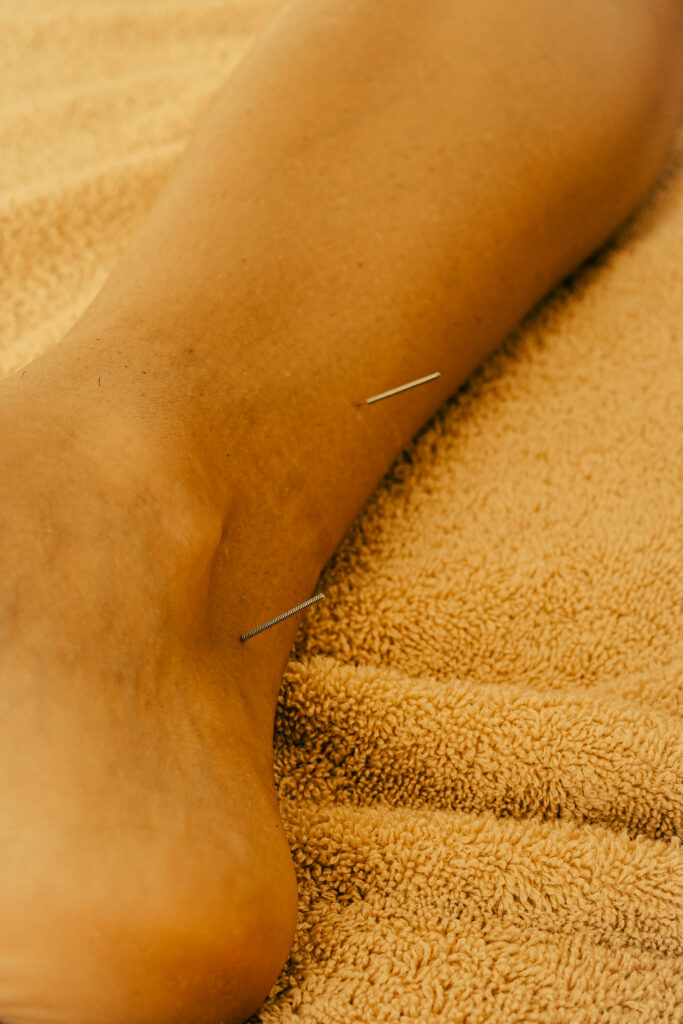
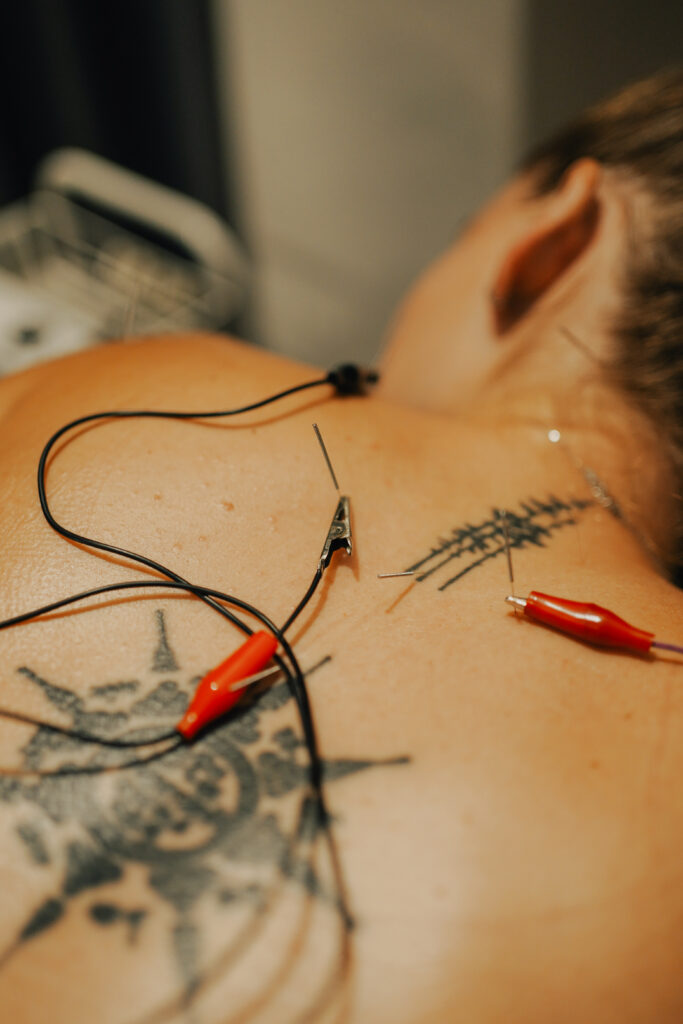
Traditional Chinese Medicine (TCM), neck and shoulder tension is not only seen as a result of poor posture or physical overuse it reflects internal disharmony and energetic imbalances. Common causes include Qi and Blood stagnation, external invasions of Wind-Cold, or Yin and Blood deficiency, leading to poor nourishment of the tendons and muscles.
Key Organ Systems Involved
- Liver (Gan) – regulates the smooth flow of Qi throughout the body. Liver Qi stagnation is a major contributor to muscle tightness and emotional tension.
- Spleen (Pi) – responsible for generating Qi and Blood. Blood deficiency can result in poor nourishment of muscles and stiffness.
- Kidney (Shen) – provides the Yin that nourishes bones and tendons. Deficiency here may lead to chronic tension.
- Urinary Bladder Meridian – travels along the neck and upper back, making it highly involved in local pain and tension syndromes.
Common TCM Patterns for Neck & Shoulder Tension
- Liver Qi Stagnation
- Symptoms: tightness, irritability, chest oppression
- Tongue: slightly red sides with thin coating
- Pulse: wiry
- Wind-Cold Invasion
- Symptoms: sudden onset after wind exposure, stiffness, chills
- Tongue: thin white coat
- Pulse: superficial and tight
- Blood Stasis
- Symptoms: sharp, fixed pain; worse at night
- Tongue: dark purple with spots
- Pulse: choppy
- Kidney Yin Deficiency
- Symptoms: chronic dull tension, dizziness, insomnia, heat sensations
- Tongue: red with scanty coat
- Pulse: thin and rapid
Treatment Principles in TCM
- Soothe Liver Qi to release muscular and emotional tension.
- Expel Wind and Cold when symptoms are acute and environmental in origin.
- Invigorate Blood and remove stasis for sharp, fixed pain.
- Nourish Yin and Blood for chronic, deficient types.
- Unblock meridian pathways, especially the Taiyang (Bladder) and Shaoyang (Gallbladder) channels running through the neck and shoulders.
TCM-Based Diet and Lifestyle Tips
Diet
- Liver Qi stagnation: include citrus fruits, peppermint tea, ginger, and leafy greens.
- Blood deficiency: eat iron-rich foods like spinach, liver, red dates, and beetroot.
- Wind-Cold: avoid raw or cold foods; consume warming soups, garlic, and scallions.
- Yin deficiency: add cooling and moistening foods like pears, black sesame, bone broth.
Lifestyle
- Take frequent breaks from sitting and stretch your neck and shoulders regularly.
- Practice meditation or breathing exercises to calm the Liver and ease tension.
- Avoid exposure to cold air on your neck and upper back—keep warm especially in windy environments.
Daily Acupressure for Neck & Shoulder Tension
- GB21 – Jian Jing (肩井)
- Location: halfway between the spine and the tip of the shoulder
- Function: releases shoulder tension, regulates Qi flow
- Technique: Press with thumb or knuckles for 1–2 minutes with deep breathing
- LI4 – He Gu (合谷)
- Location: between the thumb and index finger
- Function: dispels Wind, relieves pain, calms the nervous system
- Caution: avoid during pregnancy
- SI11 – Tian Zong (天宗)
- Location: in the middle of the scapula (shoulder blade)
- Function: relaxes shoulder muscles and relieves local pain
- BL10 – Tian Zhu (天柱)
- Location: 1.3 cun lateral to the midline at the base of the skull
- Function: clears Wind, relaxes neck tension, benefits the head
- LV3 – Tai Chong (太冲)
- Location: top of the foot between the first and second toes
- Function: soothes Liver Qi, releases emotional and muscular stress
TCM Treatment Recommendations
- Acupuncture + Moxibustion for Wind-Cold conditions
- Cupping therapy on shoulders and neck to relieve stagnation
- Electroacupuncture for chronic muscular tension and stiffness
Conclusion
Neck and shoulder tension in TCM is not just a musculoskeletal issue—it reflects deeper imbalances in the Liver, Spleen, Kidney, and meridian systems. By addressing the root causes through acupuncture, daily acupressure, diet, and lifestyle changes, long-term relief and holistic healing can be achieved. As always, consult a qualified TCM practitioner for personalized diagnosis and care.
Sources
- Maciocia, Giovanni. The Practice of Chinese Medicine: The Treatment of Diseases with Acupuncture and Chinese Herbs. ISBN: 9780443074905
- Deadman, Peter et al. A Manual of Acupuncture. ISBN: 0951054651
- Chen, John K. & Chen, Tina T. Chinese Medical Herbology and Pharmacology. ISBN: 9780974063504