
In Traditional Chinese Medicine (TCM), the Heart (Xin) is more than a physical organ—it is the seat of the Shen (spirit/mind). The Shen governs consciousness, emotions, memory, and sleep. When the Heart is balanced, the Shen rests peacefully, leading to emotional stability, restful sleep, and clear thinking.
However, when anxiety takes root, the Shen becomes restless. Disturbances in Heart Qi, Yin, or Blood often prevent the Shen from anchoring at night, resulting in insomnia, palpitations, fatigue, and racing thoughts. This explains why prolonged anxiety not only robs people of quality sleep but also drains their energy during the day.
Key Organ Systems Involved
Heart (Xin) – Houses the Shen, governs Blood circulation. Imbalance leads to anxiety, palpitations, restlessness, and insomnia.
Spleen (Pi) – Produces Blood that nourishes the Heart. Weak Spleen Qi fails to generate enough Blood, leading to Shen disturbance.
Kidney (Shen) – Provides Yin and Essence. Deficiency fails to anchor the Heart, causing night sweats, insomnia, and anxiety.
Liver (Gan) – Ensures smooth Qi flow. Stress and anger can stagnate Liver Qi, which then disturbs the Heart and Shen.
Common TCM Patterns of Anxiety-Related Imbalances
Heart Yin Deficiency
- Symptoms: insomnia, anxiety, palpitations, night sweats, dry mouth.
- Tongue: red, no coat.
- Pulse: thin and rapid.
Heart Blood Deficiency
- Symptoms: palpitations, poor memory, dizziness, pale complexion, light sleep.
- Tongue: pale, thin.
- Pulse: thready and weak.
Heart and Kidney Disharmony
- Symptoms: anxiety, insomnia, night sweats, tinnitus, lower back weakness.
- Tongue: red with little coat.
- Pulse: thin and rapid.
Phlegm-Heat Disturbing the Heart
- Symptoms: anxiety, restlessness, insomnia, racing thoughts, chest oppression.
- Tongue: red with sticky yellow coating.
- Pulse: rapid and slippery.
Treatment Principles in TCM
- Nourish Heart Yin and Blood to calm the Shen.
- Clear Heat or Phlegm obstructing the Heart.
- Harmonize Heart and Kidney to restore emotional balance.
- Strengthen Spleen Qi to generate Blood for the Shen.
- Anchor and settle the Shen for restful sleep.
Diet and Lifestyle Tips (TCM-Based)
Diet Tips
- To nourish Heart Blood: red dates, longan fruit, spinach, eggs, bone broth.
- To tonify Yin: goji berries, black sesame, lily bulb, pears, tofu.
- To calm Shen: chamomile tea, lotus seeds, poria mushroom.
- Avoid excessive alcohol, coffee, spicy foods, and late-night eating which disturb the Heart and Shen.
Lifestyle Tips
- Establish a calming bedtime routine: warm foot bath, gentle breathing, no screens before sleep.
- Practice meditation, Qi Gong, or Tai Chi to calm the mind.
- Express emotions through journaling, art, or talking to release mental burden.
- Maintain balanced work–rest cycles to prevent overthinking and exhaustion.
- Spend time in nature to ground the Shen and reduce anxiety.
Daily Acupressure for Heart–Shen Balance
HT7 – Shenmen (神門)
- Location: At the wrist crease, radial to the pisiform bone.
- Function: Calms the Shen, relieves anxiety, aids sleep.
PC6 – Neiguan (內關)
- Location: 2 cun above the wrist crease, between tendons.
- Function: Calms the mind, regulates Heart, relieves chest tightness.
Yin Tang (印堂)
- Location: Between the eyebrows.
- Function: Calms the Shen, reduces anxiety and restlessness.
SP6 – Sanyinjiao (三陰交)
- Location: 3 cun above the medial malleolus.
- Function: Tonifies Yin, harmonizes Heart, Spleen, and Kidney.
KD1 – Yongquan (湧泉)
- Location: Sole of the foot, between 2nd and 3rd metatarsal bones.
- Function: Grounds energy, anchors the Shen, relieves anxiety.
Technique: Press gently for 1–2 minutes per point while breathing slowly.
TCM Treatment Recommendations
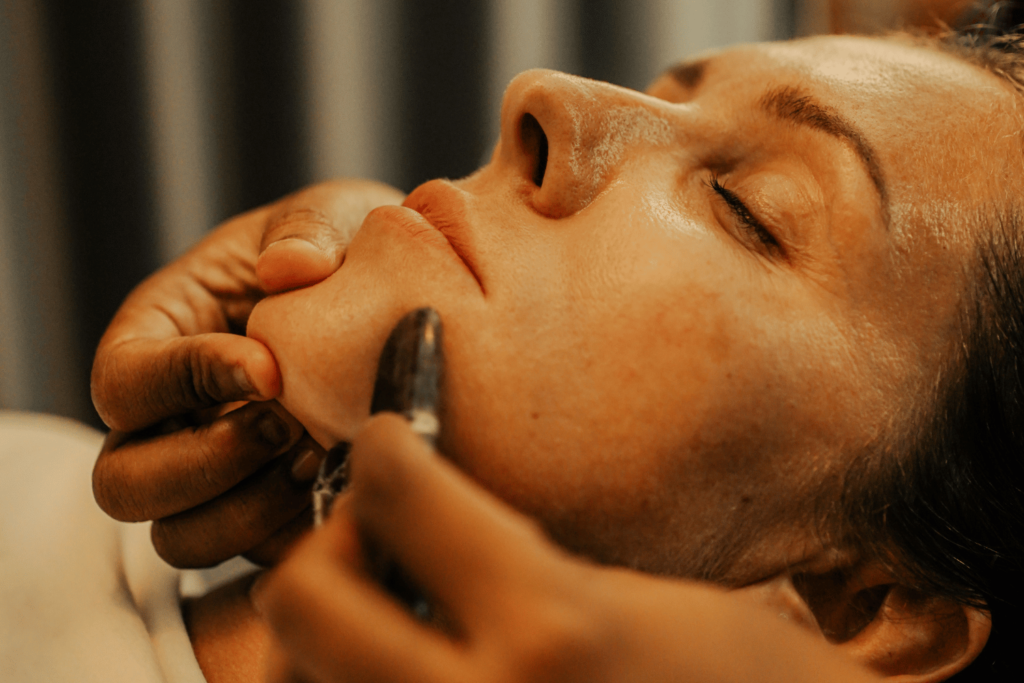
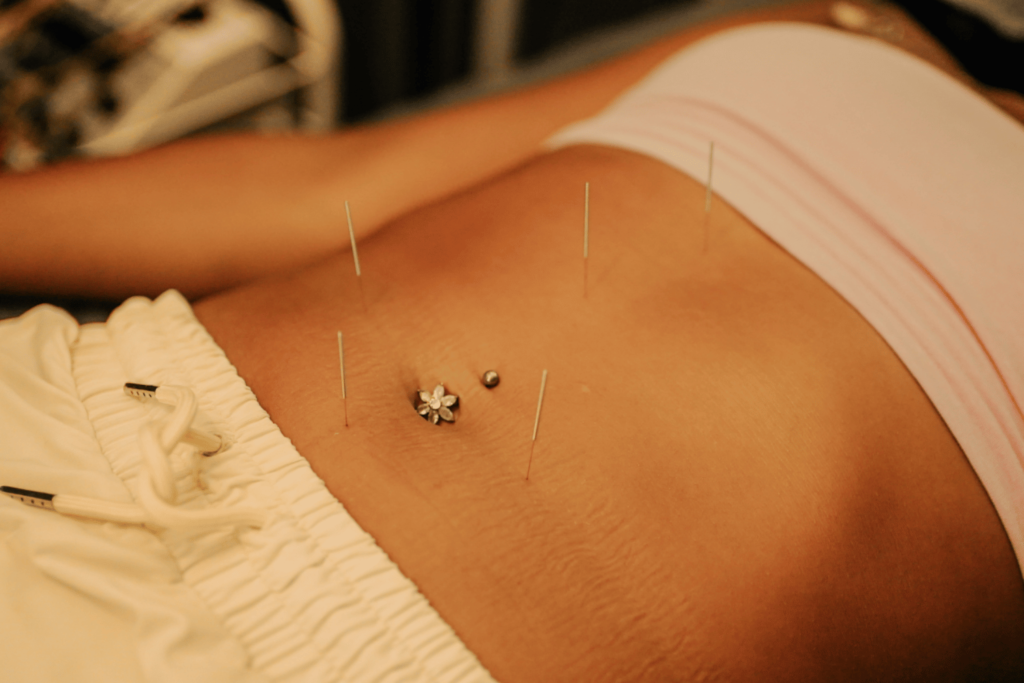
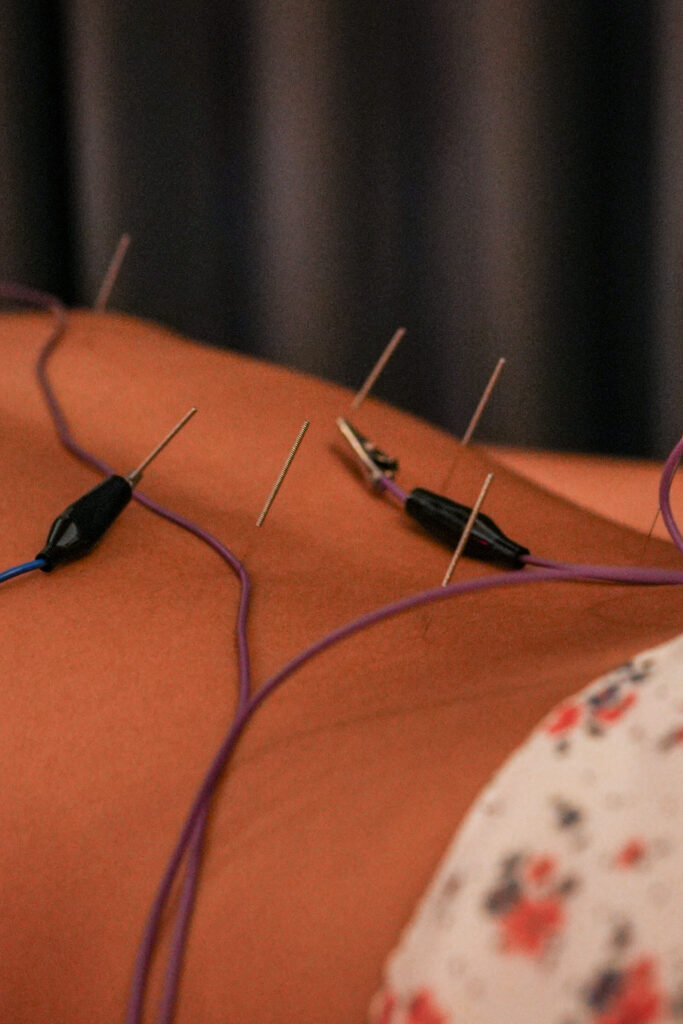
Acupuncture: Commonly used points include HT7, PC6, Yin Tang, SP6, and KD3 to calm the Shen and restore balance.
Cupping or Gua Sha: Along the upper back to release tension and improve circulation.
Meditation : To regulate emotions and strengthen Heart–Kidney communication.
ConclusionIn TCM, anxiety is not only an emotional issue but also a reflection of imbalances in the Heart and Shen. When the Shen cannot rest, sleep becomes shallow and energy is depleted. By nourishing Heart Yin and Blood, harmonizing organ systems, and calming the Shen through acupuncture, herbs, diet, and lifestyle adjustments, one can restore both inner peace and physical vitality.
Sources
- Maciocia, Giovanni. The Foundations of Chinese Medicine. Elsevier, 2015.
- Deadman, Peter et al. A Manual of Acupuncture. JCM Publications, 2007.
- Chen, John K. & Chen, Tina T. Chinese Medical Herbology and Pharmacology. Art of Medicine Press, 2004.