
Many people experience stiffness and aching in the lower back upon waking, which gradually improves after movement. In Traditional Chinese Medicine (TCM), this is often attributed to Cold-Damp accumulation obstructing the channels in the lumbar region.
Cold and Damp are external pathogenic factors that may invade the body, especially when the back is exposed to damp environments, cold drafts, or wet weather. Internally, Spleen Qi weakness can fail to transform fluids, leading to Damp accumulation. The Kidneys, which govern the low back, may also be too weak to resist Cold.
Together, this creates an environment where Qi and Blood cannot circulate freely, resulting in heaviness, stiffness, and pain—especially in the morning when Yang Qi is weakest.
Key Organ Systems Involved
- Kidney (Shen) – Governs the low back and stores Essence. Kidney deficiency makes the back more vulnerable to Cold-Damp invasion.
- Spleen (Pi) – Responsible for fluid metabolism. A weak Spleen allows Dampness to accumulate.
- Liver (Gan) – Ensures smooth Qi and Blood flow. Stagnation worsens stiffness and pain.
- Urinary Bladder Channel – Runs along the back and is often where Cold-Damp lingers.
Common TCM Patterns for Morning Stiffness
- Cold-Damp Invasion
- Symptoms: heavy, stiff, aching low back, worse in the morning or rainy days, better with warmth and movement.
- Tongue: pale with white greasy coating.
- Pulse: slow and slippery.
- Damp-Heat Accumulation
- Symptoms: stiffness with swelling or burning sensation, worse in humid weather, possible urinary discomfort.
- Tongue: red with yellow greasy coating.
- Pulse: slippery and rapid.
- Kidney Yang Deficiency with Cold-Damp
- Symptoms: chronic dull low back pain, morning stiffness, fatigue, cold limbs, frequent urination.
- Tongue: pale, swollen, moist.
- Pulse: deep and weak.
Treatment Principles in TCM
- Expel Cold and Damp from the lumbar region.
- Warm Yang and strengthen the Kidneys.
- Strengthen Spleen Qi to transform Dampness.
- Move Qi and Blood to restore mobility and relieve pain.
Diet and Lifestyle Tips (TCM-Based)
Diet Tips
- To expel Cold-Damp: include ginger, cinnamon, garlic, scallions, and warm soups.
- For Kidney support: walnuts, black beans, bone broth, sesame seeds.
- For Spleen strengthening: millet, sweet potatoes, pumpkin, oats.
- Avoid: cold/raw foods, iced drinks, dairy, greasy or overly sweet foods.
Lifestyle Tips
- Keep the low back warm, especially during sleep.
- Avoid damp environments and sitting on cold surfaces.
- Gentle morning stretches help move Qi and Blood.
- Try Qigong or Tai Chi to support Kidney and Spleen Qi.
- Use a warm compress or moxa stick on the lumbar area before bed.
Daily Acupressure for Morning Stiffness
- BL23 – Shen Shu (腎俞)
- Location: 1.5 cun lateral to L2.
- Function: Tonifies Kidney Qi, strengthens low back.
- GV4 – Ming Men (命門)
- Location: On the midline below the spinous process of L2.
- Function: Warms Kidney Yang, dispels Cold.
- BL40 – Wei Zhong (委中)
- Location: Midpoint of popliteal crease.
- Function: Benefits lumbar region, clears Damp and stagnation.
- SP9 – Yin Ling Quan (陰陵泉)
- Location: Below medial condyle of tibia.
- Function: Resolves Dampness, supports Spleen.
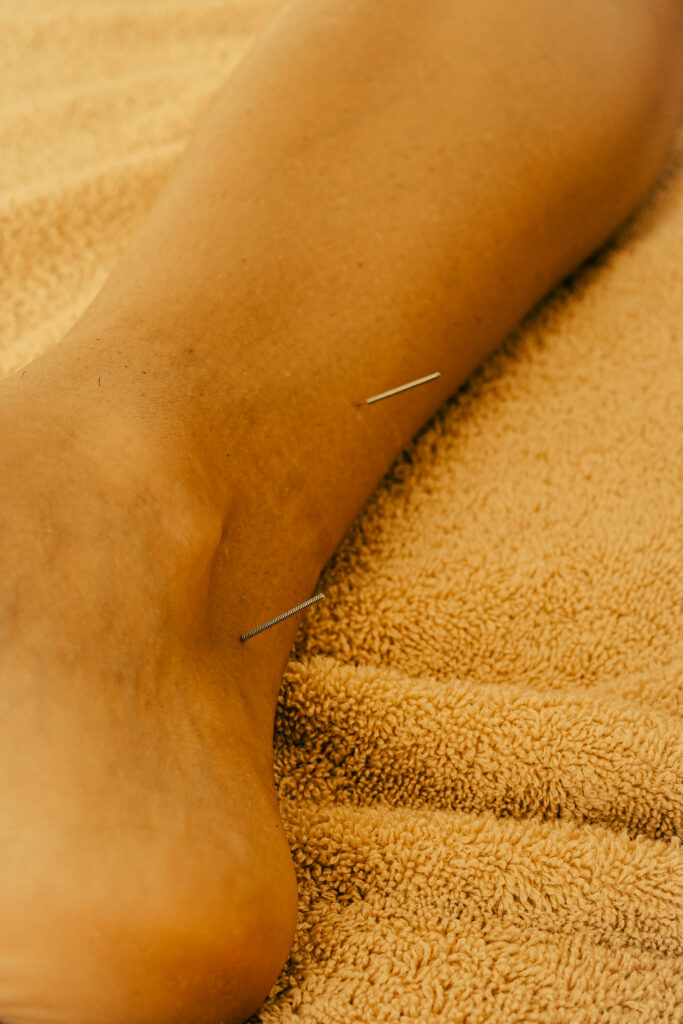
- KD3 – Tai Xi (太溪)
- Location: Between medial malleolus and Achilles tendon.
- Function: Tonifies Kidney Yin and Yang, strengthens lumbar support.
Technique: Massage each point for 1–2 minutes, preferably in the morning or before bed.
TCM Treatment Recommendations
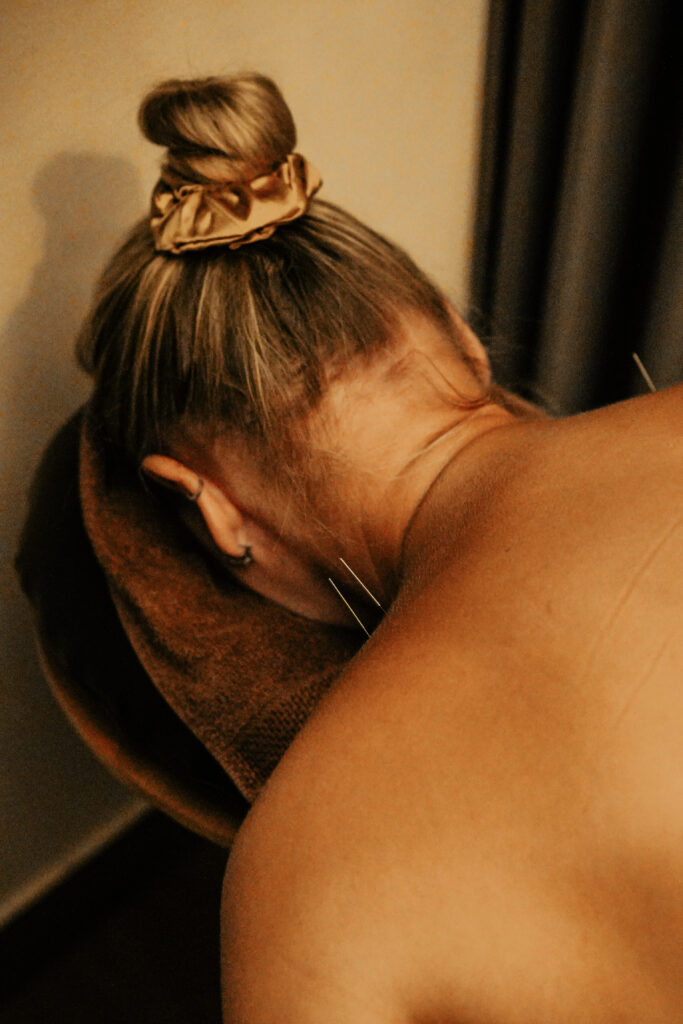
- Acupuncture: BL23, GV4, SP9, BL40, KD3 for expelling Damp, warming Yang, and relieving stiffness.
- Moxibustion: GV4 and BL23 to warm the Kidneys and dispel Cold.
- Cupping therapy: along the Bladder channel to move Damp and Qi stagnation.
Conclusion
Morning stiffness in the lower back is often a sign of Cold-Damp accumulation obstructing Qi and Blood flow. TCM emphasizes that true relief requires expelling Cold and Damp while strengthening the Kidneys and Spleen. With the right balance of diet, lifestyle adjustments, acupressure, acupuncture, herbs, and warming therapies like moxibustion, mobility can be restored and back health maintained—even in damp and cold seasons.
Sources
- Maciocia, Giovanni. The Practice of Chinese Medicine. Elsevier, 2005. ISBN: 9780443074905
- Deadman, Peter, Al-Khafaji, M., & Baker, K. A Manual of Acupuncture. Journal of Chinese Medicine Publications, 2007. ISBN: 0951054651
- Chen, John K., & Chen, Tina T. Chinese Medical Herbology and Pharmacology. Art of Medicine Press, 2004. ISBN: 9780974063504