
In today’s modern lifestyle, many people spend most of their time sitting—whether working at a desk, driving, or relaxing. While Western medicine links prolonged sitting to spinal compression and muscle tension, Traditional Chinese Medicine (TCM) views it through a more holistic lens.
In TCM, prolonged sitting leads to stagnation of Qi and Blood, especially in the lower back and hips. It also weakens the Kidney organ system, which is essential for maintaining lower back strength and vitality. Over time, this condition may cause chronic pain, stiffness, and deeper energetic imbalances if left unaddressed.
Key Organ Systems Involved
1. Kidneys (Shen):
Govern the bones and lower back. Prolonged sitting weakens Kidney Qi and Yang, leading to fatigue and lower back pain.
2. Liver (Gan):
Regulates the smooth flow of Qi. Sitting too long causes Liver Qi stagnation, which can lead to muscle tightness and discomfort.
3. Spleen (Pi):
Supports Qi production and fluid metabolism. A sedentary lifestyle weakens the Spleen, contributing to Dampness accumulation in the lower body.
Common TCM Patterns for Sitting-Induced Back Pain
1. Qi and Blood Stagnation:
Dull, sharp, or achy pain due to blocked circulation. The pulse may feel wiry or choppy.
2. Kidney Deficiency (especially Yang):
Chronic, deep pain with a cold sensation and fatigue. Pulse feels deep and weak.
3. Liver Qi Stagnation:
Tension and pain that worsens with stress or emotional suppression. Pulse feels tight or wiry.
4. Damp Accumulation in the Lower Jiao (lower body):
Heaviness or fatigue in the lower back, worse with sitting or damp weather.
Treatment Principles in TCM
– Promote Qi and Blood circulation
– Strengthen Kidney and Spleen energy
– Release Liver Qi stagnation
– Eliminate Dampness from the lower back and hips
Diet and Lifestyle Tips (TCM-Based)
Recommended:
– Warm, nourishing foods: soups, stews, cooked vegetables, brown rice, ginger, goji berries
– Take regular movement breaks every hour: stand, walk, or stretch
– Gentle exercises: Tai Chi, Qigong
– Keep your lower back warm—avoid sitting on cold surfaces
Avoid:
– Raw or cold foods and drinks
– Sitting for long periods without breaks
– Staying up too late and insufficient rest
Daily Acupressure for Sedentary Back Pain
BL23 (Shenshu)
Location : 1.5 cun lateral to the lower border of the L2 vertebra.
Function : Strengthens Kidney energy and warms the lower back.
BL40 (Weizhong)
Location : Center of the back of the knee.
Function: Eases lower back pain and improves meridian flow.
GB30 (Huantiao)
Location : Side of the buttocks near the hip joint.
Function : Relieves tension in the hips and glutes.
TCM Treatment Recommendation
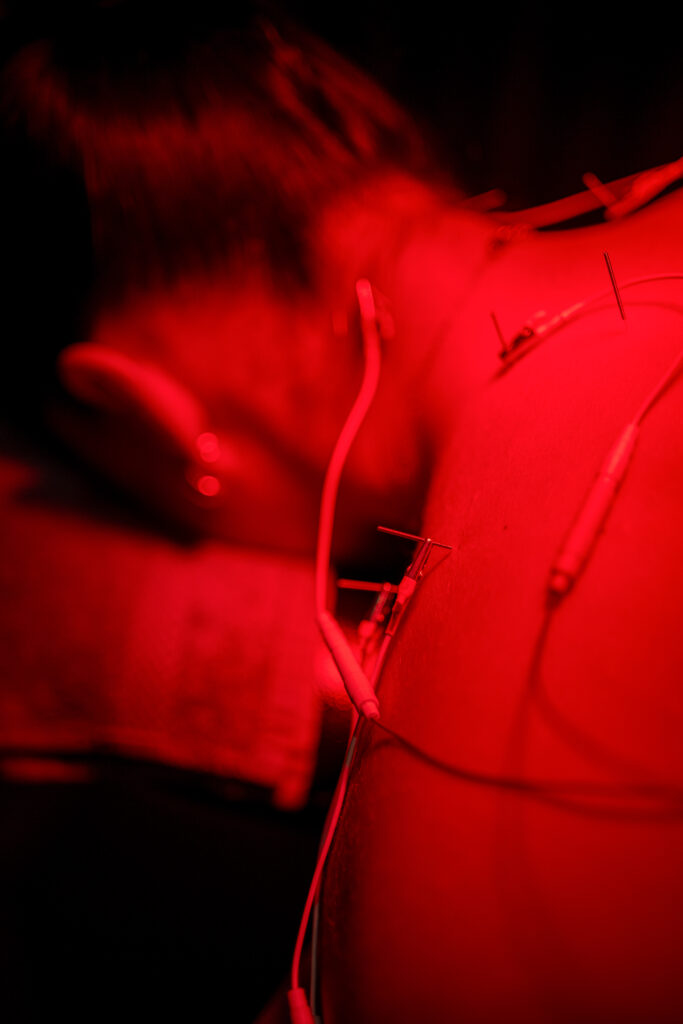
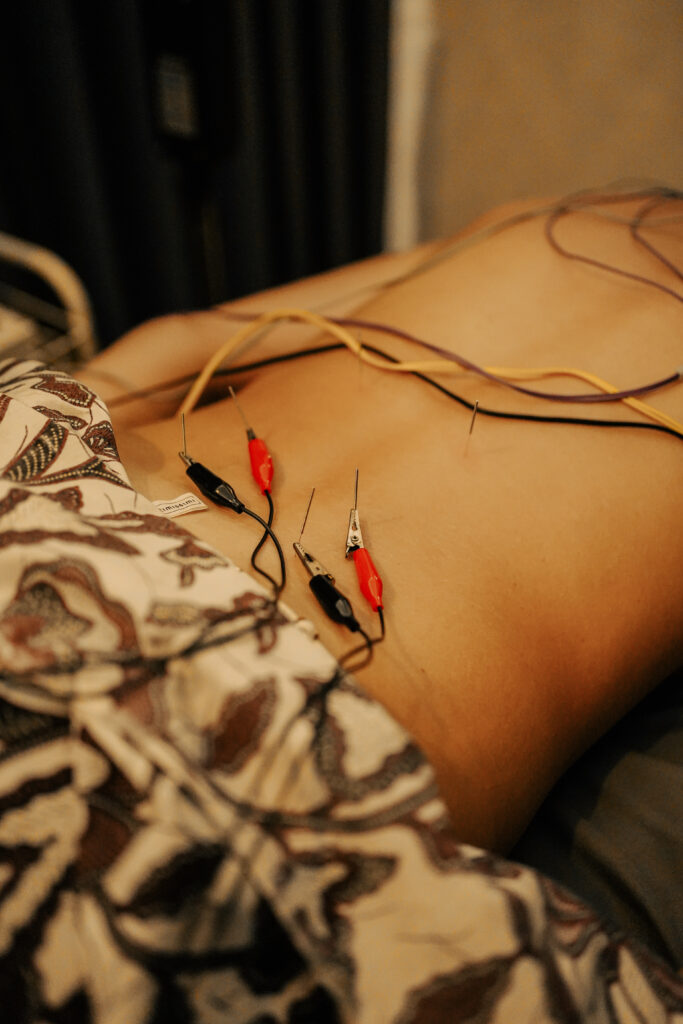
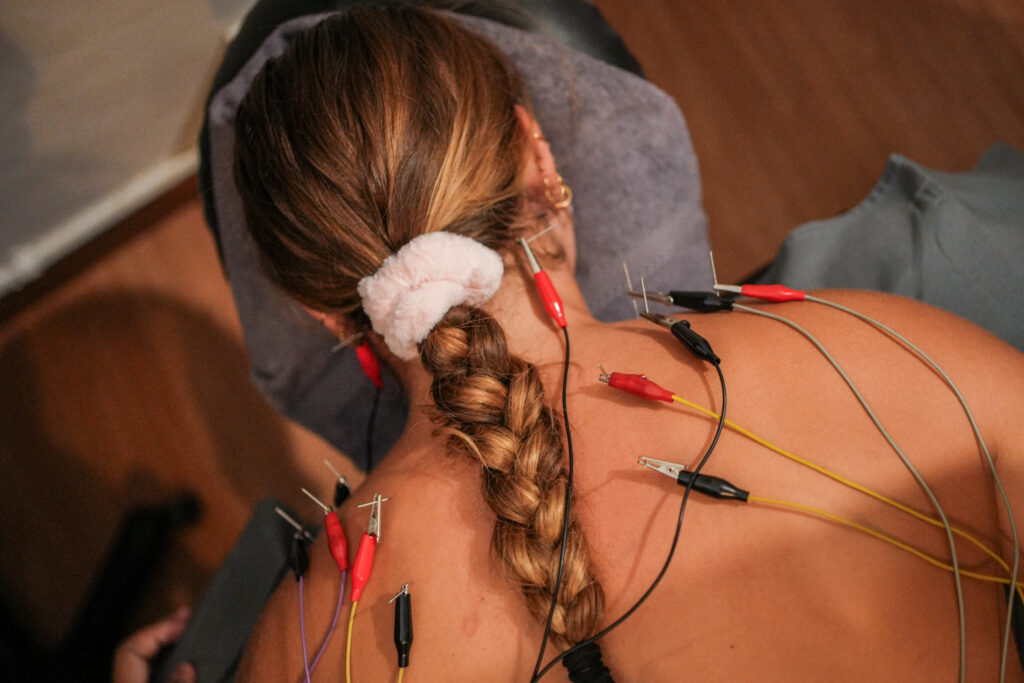
– Acupuncture: Points such as BL23, BL40, GB30, and DU3 help improve circulation and support the Kidneys.
– Cupping therapy: Helps release Qi stagnation and tight muscles.
– Moxibustion: Warms meridians and strengthens Yang energy.
Conclusion
Sitting for long hours might seem harmless, but in TCM it’s a major cause of lower back imbalance and energy stagnation. By understanding its impact and applying TCM-based care—like acupuncture, gentle movement, and lifestyle awareness—you can restore balance from within.
Sources
1. Maciocia, G. The Practice of Chinese Medicine: The Treatment of Diseases with Acupuncture and Chinese Herbs. Elsevier, 2nd Edition.
2. Deadman, P., Al-Khafaji, M., & Baker, K. A Manual of Acupuncture. Journal of Chinese Medicine Publications.
3. World Health Organization (WHO). Acupuncture: Review and Analysis of Reports on Controlled Clinical Trials, 2003.
4. National Center for Complementary and Integrative Health (NCCIH). https://www.nccih.nih.gov
5. Chen, J., & Wang, Y. Chinese Medical Herbology and Pharmacology. Art of Medicine Press, 2004.
6. Zhao, L., et al. “Effect of acupuncture on chronic low back pain: a randomized controlled trial.” Spine, 2017.
5. Kidney Deficiency: The Root of Chronic Low Back Pain
Photos :
In Traditional Chinese Medicine (TCM), chronic low back pain is seen not only as a musculoskeletal issue but also as a sign of internal imbalance—most notably, a Kidney Deficiency. In TCM philosophy, the Kidneys are the foundation of life: they store Essence (Jing), govern bones, and maintain the strength of the lower back. When Kidney energy is weakened—due to aging, overwork, excessive sexual activity, or chronic illness—the lower back loses support, resulting in chronic, dull, or cold pain that doesn’t resolve easily.
Key Organ Systems Involved
1. Kidneys (Shen):
The central organ in this condition. They govern the lower back and spine. Weak Kidney Qi or Yang leads to fatigue, dull back pain, and feelings of coldness.
2. Urinary Bladder (Pang Guang):
This channel runs along the back. Blockage in the Bladder meridian leads to stiffness and pain.
3. Liver (Gan):
Supports the smooth flow of Qi and nourishes sinews. If Liver Blood is deficient, the muscles and tendons of the back become weak or tight.
Common TCM Patterns for Chronic Low Back Pain
1. Kidney Yang Deficiency:
Dull lower back pain with cold sensations, fatigue, frequent urination, cold limbs, pale tongue, deep and weak pulse.
2. Kidney Yin Deficiency:
Aching back worse at night, night sweats, dry mouth, restlessness, red tongue with scanty coating, thin and rapid pulse.
3. Kidney Essence Deficiency:
Weakness in the back and knees, poor memory, hair loss, infertility or weak bones.
4. Qi and Blood Stagnation:
Sharp or stabbing pain, fixed in one spot, worse with pressure or immobility, dark tongue, choppy pulse.
Treatment Principles in TCM
– Tonify and warm Kidney Yang (if cold and fatigue are present)
– Nourish Kidney Yin and Essence (if signs of deficiency heat appear)
– Move Qi and Blood to relieve pain
– Strengthen the Liver and Bladder meridians to improve circulation
– Expel Cold and Dampness if present
Diet and Lifestyle Tips (TCM-Based)
Recommended:
– Eat warming foods: bone broth, lamb, black beans, walnuts, ginger
– Use warming herbs/spices like cinnamon or garlic in small amounts
– Go to bed before 11 PM, avoid staying up late
– Practice gentle movement: Qigong, Tai Chi, stretching
– Keep your lower back warm with a hot water bag or heat pack
Avoid:
– Cold/raw foods (salads, smoothies, iced drinks)
– Excessive sex, overwork, chronic stress
– Sitting or sleeping on cold/damp surfaces
– Long hours of sitting without movement
Daily Acupressure for Chronic Low Back Pain
BL23 (Shenshu)
Location: 1.5 cun lateral to the lower border of the 2nd lumbar vertebra
Function: Strengthens Kidney Yang, relieves low back pain
DU4 (Mingmen)
Location: Below the spinous process of L2, on the midline
Function: Warms and tonifies Kidney Yang
KI3 (Taixi)
Location: Between the medial malleolus and Achilles tendon
Function: Nourishes Kidney Yin and strengthens the lower back
BL40 (Weizhong)
Location: Center of the crease behind the knee
Function: Eases lumbar pain and relaxes sinews
Technique: Apply gentle pressure for 1–2 minutes, breathing slowly. Use both thumbs or a massage tool.
TCM Treatment Recommendation
– Acupuncture: Use points like BL23, DU4, KI3, and BL40 to strengthen Kidney energy and relieve pain
– Moxibustion: Especially useful for cold-type back pain; apply over DU4 and BL23
– Cupping: Helps relieve tightness and stagnant Qi/Blood in the back
– Herbal Medicine:
– You Gui Wan – Tonifies Kidney Yang
– Zuo Gui Wan – Nourishes Kidney Yin and Essence
– Du Huo Ji Sheng Tang – Effective for chronic low back pain, especially in elderly
Conclusion
Chronic low back pain can often be traced back to a weakened Kidney system, especially when symptoms are persistent, dull, and accompanied by fatigue, cold, or signs of aging. Rather than merely masking the symptoms, TCM seeks to replenish what is depleted, restore internal harmony, and support the root of your energy. With acupuncture, herbal support, targeted movement, and the right lifestyle adjustments, long-term relief and vitality are within reach.
Sources
1. Maciocia, G. The Practice of Chinese Medicine. 2nd Edition. Elsevier.
2. Deadman, P. A Manual of Acupuncture. Journal of Chinese Medicine Publications.
3. Chen, J. & Wang, Y. Chinese Medical Herbology and Pharmacology. Art of Medicine Press, 2004.
4. World Health Organization (WHO). Acupuncture: Review and Analysis of Reports on Controlled Clinical Trials, 2003.
5. Zhao, L. et al. ‘Effect of acupuncture on chronic low back pain: a randomized controlled trial.’ Spine, 2017.