
In Traditional Chinese Medicine (TCM), fertility is more than the ability to conceive—it reflects the harmony of the entire body. Healthy reproduction depends on balanced Qi, Blood, Yin, Yang, and Essence (Jing). Diet is one of the most powerful tools in TCM to nourish these elements because food is seen as daily medicine that replenishes what the body uses each day.
When Qi is abundant, Blood is rich, Yin and Yang are balanced, and Essence is preserved, conception is more likely. Conversely, imbalances—whether from stress, overwork, poor diet, or chronic illness—can manifest as infertility, irregular cycles, low sperm quality, or difficulty sustaining pregnancy.
A fertility-boosting diet in TCM therefore aims to strengthen the Kidneys, nourish Liver Blood, support the Spleen, and calm the Heart to create the best environment for life to flourish.
Key Organ Systems Involved
- Kidney (Shen, 腎)
- Stores Jing (Essence), governs growth, development, and reproduction.
- Deficiency → infertility, irregular menstruation, low sperm count, early aging.
- Liver (Gan, 肝)
- Stores Blood and ensures smooth Qi flow.
- Disharmony → irregular cycles, PMS, poor egg quality, emotional stress.
- Spleen (Pi, 脾)
- Produces Qi and Blood from food.
- Weakness → poor nutrient absorption, fatigue, scanty periods.
- Heart (Xin, 心)
- Houses the Shen (spirit), connects to fertility through emotional balance.
- Imbalance → anxiety, insomnia, difficulty conceiving due to stress.
Common TCM Patterns Affecting Fertility
Kidney Yin Deficiency
- Symptoms: scanty or absent periods, night sweats, infertility, hot flushes, back pain.
- Tongue: red, little coat.
- Pulse: thin, rapid.
Kidney Yang Deficiency
- Symptoms: cold limbs, fatigue, low libido, irregular or long cycles.
- Tongue: pale, swollen.
- Pulse: deep, weak.
Liver Qi Stagnation
- Symptoms: PMS, irregular cycles, painful periods, stress-related infertility.
- Tongue: slightly red sides.
- Pulse: wiry.
Spleen Qi Deficiency
- Symptoms: fatigue, bloating, poor digestion, scanty flow, recurrent miscarriage.
- Tongue: pale with teeth marks.
- Pulse: weak.
Blood Deficiency
- Symptoms: pale complexion, dizziness, light periods, infertility, poor endometrial lining.
- Tongue: pale, thin.
- Pulse: thready.
Treatment Principles in TCM
- Tonify Kidney Yin and Yang to strengthen reproductive capacity.
- Nourish Liver Blood and regulate Qi for smooth cycles and healthy ovulation.
- Strengthen Spleen Qi to improve nutrient absorption and Blood production.
- Calm the Shen to reduce stress and support emotional stability.
- Harmonize Chong and Ren vessels to regulate menstruation and conception.
Diet and Lifestyle Tips (TCM-Based)
Diet Tips
- Kidney Nourishing Foods: black sesame, walnuts, lamb, seaweed, goji berries.
- Blood Building Foods: spinach, beetroot, eggs, chicken, bone broth, red dates.
- Qi Supporting Foods: sweet potatoes, pumpkin, oats, rice, lentils.
- Yin Nourishing Foods: pears, tofu, mulberries, lily bulbs.
- Yang Warming Foods: ginger, cinnamon, leeks, chestnuts.
- Avoid: excessive coffee, alcohol, cold/raw foods, processed sugar—they harm Kidney and Spleen.
Lifestyle Tips
- Sleep before 11 p.m. to protect Yin and Blood.
- Gentle movement (yoga, Tai Chi, walking) to move Qi and reduce stress.
- Keep abdomen and lower back warm, especially during menstruation.
- Manage stress with meditation, journaling, or creative outlets.
- Balance work and rest to avoid depleting Jing.
Daily Acupressure for Fertility Support
SP6 – Sanyinjiao (三陰交)
- Location: 3 cun above the medial ankle, behind tibia.
- Function: Tonifies Kidney, Spleen, Liver; regulates menstruation and fertility.
KI3 – Taixi (太溪)
- Location: Between medial ankle and Achilles tendon.
- Function: Strengthens Kidney Yin and Yang, supports reproductive health.
REN4 – Guanyuan (關元)
- Location: 3 cun below the navel.
- Function: Nourishes Kidney Essence, regulates uterus, improves fertility.
LV3 – Taichong (太沖)
- Location: Top of foot, between 1st and 2nd metatarsal bones.
- Function: Moves Liver Qi, relieves PMS, improves emotional balance.
ST36 – Zusanli (足三里)
- Location: 3 cun below knee, one finger lateral to tibia.
- Function: Strengthens Qi and Blood, improves overall vitality.
Technique: Apply gentle pressure for 1–2 minutes per point, with slow breathing.
TCM Treatment Recommendations
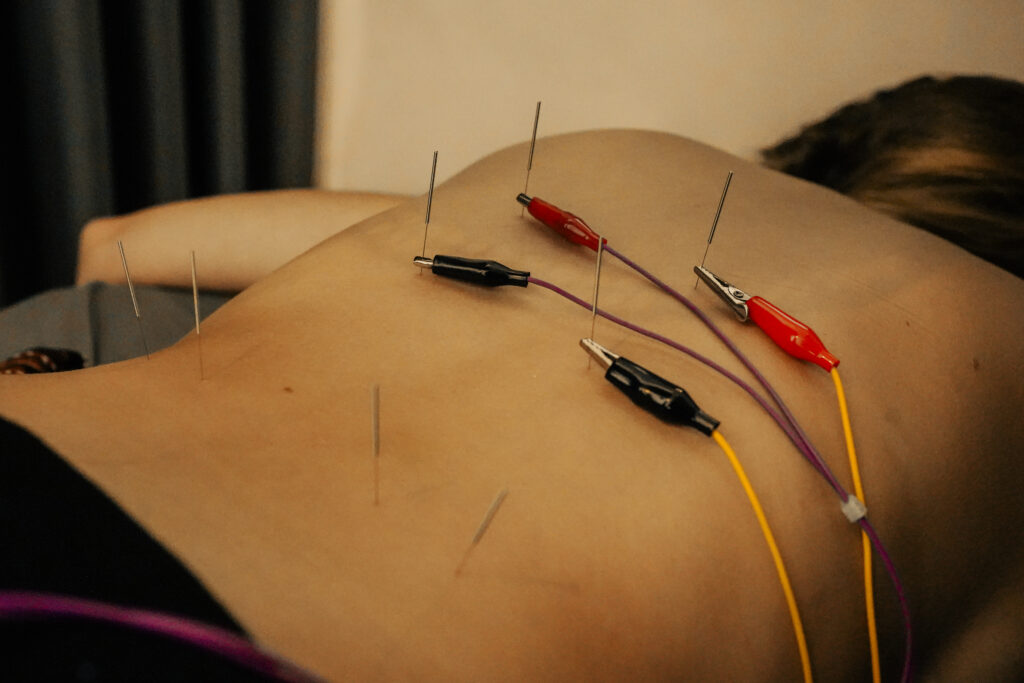
- Acupuncture:
- For Kidney deficiency: KI3, REN4, BL23.
- For Liver Qi stagnation: LV3, GB34, LI4.
- For Blood deficiency: SP6, ST36, SP10.
- For Spleen Qi deficiency: ST36, REN12, BL20.
- Herbal Medicine:
- Zuo Gui Wan → Kidney Yin deficiency with infertility.
- You Gui Wan → Kidney Yang deficiency with cold uterus, infertility.
- Ba Zhen Tang → Qi and Blood deficiency with fatigue and scanty periods.
- Xiao Yao San → Liver Qi stagnation with PMS and stress.
- Moxibustion: For cold-type infertility, applied on REN4, REN6, DU4.
Conclusion
Fertility in TCM is a mirror of overall health. When the Kidneys are strong, the Liver ensures smooth Qi and abundant Blood, the Spleen provides nourishment, and the Heart keeps the Shen calm, conception is more likely.
Through a fertility-boosting diet, lifestyle adjustments, acupressure, and TCM treatments like acupuncture and herbal formulas, couples can support natural hormonal balance and create an optimal environment for conception.
Sources
- Lyttleton, Jane. Treatment of Infertility with Chinese Medicine. Churchill Livingstone, 2004.
- Flaws, Bob. A Handbook of Chinese Medical Gynecology. Blue Poppy Press, 2003.
- Pitchford, Paul. Healing with Whole Foods: Asian Traditions and Modern Nutrition. North Atlantic Books, 2002.