
Peripheral neuropathy occurs when the peripheral nerves, which carry signals between the brain, spinal cord, and the rest of the body, become damaged or dysfunctional. The condition most commonly affects the hands and feet and may cause numbness, tingling, burning sensations, increased sensitivity, weakness, or sharp and electric shock-like pain. Diabetes is one of the most common causes of peripheral neuropathy, but nerve damage can also occur due to vitamin B12 deficiency, chemotherapy, alcohol-related nerve damage, autoimmune conditions, chronic kidney disease, traumatic injuries, infections, and prolonged nerve compression. Symptoms can vary significantly from person to person. Some people initially notice mild tingling in the toes or fingertips, while others experience burning pain, reduced sensation, weakness, or difficulty maintaining balance. Depending on the underlying cause, symptoms may develop gradually over months or appear more rapidly.
From a Traditional Chinese Medicine (TCM) perspective, peripheral neuropathy is not treated as one uniform pattern. Numbness, tingling, weakness, and nerve pain are evaluated according to the individual’s overall condition, including the circulation and nourishment of Qi and Blood, the pathways affected, and the health of the internal organ systems. In TCM theory, healthy muscles, tendons, and extremities depend on adequate nourishment from Qi and Blood and their smooth circulation through the channels and collaterals. When circulation becomes obstructed, symptoms such as tingling, burning, or localized pain may occur. When Qi and Blood are insufficient, the extremities may instead become poorly nourished, resulting in numbness, weakness, fatigue, or slower recovery. Long-standing neuropathy may involve deeper deficiency patterns, particularly those associated with the Liver and Kidneys. In other patients, Dampness or Phlegm may obstruct the channels and contribute to persistent numbness, swelling, or a sensation of heaviness. For this reason, two people with the same medical diagnosis of peripheral neuropathy may receive different TCM treatment strategies.
Key Organ Systems Involved
- Liver (Gan, 肝): The Liver stores Blood and, within TCM theory, is responsible for nourishing the tendons and supporting smooth movement. When Liver Blood is insufficient, the muscles and extremities may not receive adequate nourishment. This can contribute to numbness, cramping, weakness, or reduced flexibility. The Liver is also responsible for maintaining the smooth movement of Qi. When this circulation becomes stagnant, pain and uncomfortable sensations may become more noticeable.
- Spleen (Pi, 脾): The Spleen plays an important role in transforming food into Qi and Blood. When Spleen Qi is weak, the body may have difficulty producing sufficient Qi and Blood to nourish the limbs. Spleen weakness is also associated with Dampness accumulation in TCM, which may obstruct the channels and contribute to heaviness, swelling, sluggishness, or persistent numbness.
- Kidneys (Shen, 腎): The Kidneys store Essence, known as Jing, and are associated with long-term vitality, bones, and marrow in TCM theory. Chronic illness, aging, or prolonged physical depletion may gradually weaken Kidney energy. In long-standing neuropathy, this pattern may present with persistent numbness together with fatigue, weakness of the knees and lower back, or slower recovery.
Common TCM Patterns in Peripheral Neuropathy
- Qi and Blood Deficiency: When Qi and Blood are insufficient, the extremities may not receive adequate nourishment. Patients may experience mild but persistent numbness, fatigue, muscular weakness, dizziness, a pale complexion, or slow recovery. Treatment generally focuses on strengthening Qi, nourishing Blood, and improving nourishment of the affected channels.
- Qi and Blood Stagnation. Stagnation is more commonly associated with painful or localized symptoms. It may occur following trauma, repetitive strain, prolonged nerve compression, or chronic musculoskeletal tension. Symptoms may include fixed pain, tingling, sharp or stabbing sensations, tenderness, or discomfort that becomes worse after remaining in one position for too long. The treatment approach focuses on restoring circulation and opening the affected channels.
- Damp-Phlegm Obstruction: Dampness and Phlegm are considered obstructive factors in TCM. When they accumulate within the channels, patients may experience persistent numbness, heaviness of the limbs, swelling, sluggishness, or reduced mobility. Treatment aims to strengthen the Spleen, resolve Dampness, and restore normal circulation.
- Liver and Kidney Deficiency: This pattern is more frequently considered in chronic or age-related conditions. Symptoms may include long-standing numbness, weakness of the knees and lower back, fatigue, dizziness, tinnitus, or slow recovery. Treatment focuses on nourishing the Liver and Kidneys while improving circulation to the affected extremities.
TCM Treatment Principles
Treatment for peripheral neuropathy should be individualized according to the patient’s symptoms, constitution, underlying medical condition, and TCM pattern. The main treatment principles may include:
- Promoting the circulation of Qi and Blood
- Opening obstructed channels and collaterals
- Nourishing Liver Blood
- Strengthening Kidney Essence
- Supporting Spleen Qi
- Resolving Dampness when present
- Supporting sensation and mobility
- Reducing pain and muscular tension
Rather than treating numbness or tingling alone, the aim is to identify why the affected areas are not being adequately nourished or why normal circulation has become obstructed.
Daily Acupressure for Peripheral Neuropathy
- Zusanli (ST36, 足三里): Located below the knee, approximately four finger-widths beneath the kneecap and slightly lateral to the tibia. Zusanli is traditionally used to strengthen Qi, support the Spleen and Stomach, and promote general vitality. In patients with weakness or deficiency patterns, it may be incorporated to support nourishment of the extremities.
- Sanyinjiao (SP6, 三陰交): Located approximately three cun above the medial malleolus, near the posterior border of the tibia. This point intersects the Spleen, Liver, and Kidney channels. It is traditionally used to nourish Blood, strengthen the Spleen and Kidneys, and support circulation in the lower limbs.
- Hegu (LI4, 合谷): Located on the back of the hand between the first and second metacarpal bones. Hegu is commonly used to regulate Qi and relieve pain. It may be particularly useful when symptoms involve the hands or upper extremities.
- Taichong (LR3, 太衝): Located on the top of the foot between the first and second metatarsal bones. Taichong regulates Liver Qi and promotes smoother circulation through the channels. It is often combined with other points when stagnation contributes to discomfort in the lower extremities. Each point can be massaged gently for approximately one to two minutes. Pressure should remain comfortable, particularly in areas where sensation is reduced.
Acupuncture for Peripheral Neuropathy
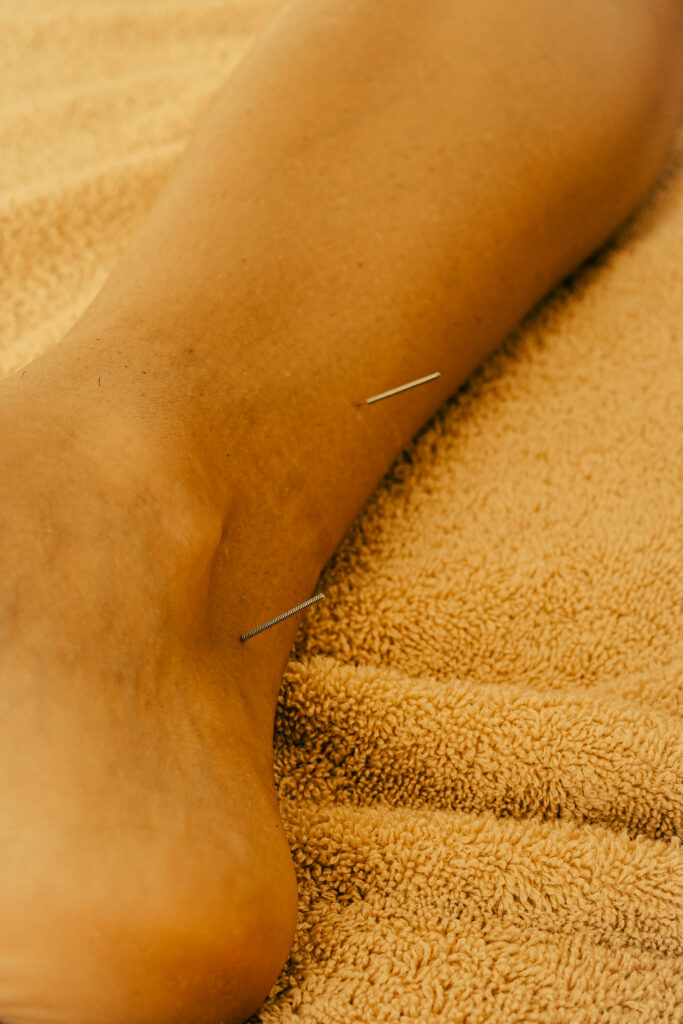
Acupuncture treatment is selected according to both the location of the symptoms and the patient’s underlying pattern. For numbness or tingling in the feet, treatment may combine local points around the lower legs and feet with points that support Qi, Blood, Liver, Spleen, or Kidney function. Symptoms affecting the hands may require a different combination of local and distal points. From a modern biomedical perspective, acupuncture has also been investigated for different forms of peripheral neuropathy, including diabetic and chemotherapy-induced neuropathy. Research has explored possible effects on pain modulation, local circulation, inflammatory pathways, and nerve function. Current evidence is promising for some neuropathy-related symptoms but remains variable depending on the cause and quality of available studies. Acupuncture should therefore be considered a complementary treatment rather than a replacement for diagnosing and managing the underlying medical condition.
Electroacupuncture
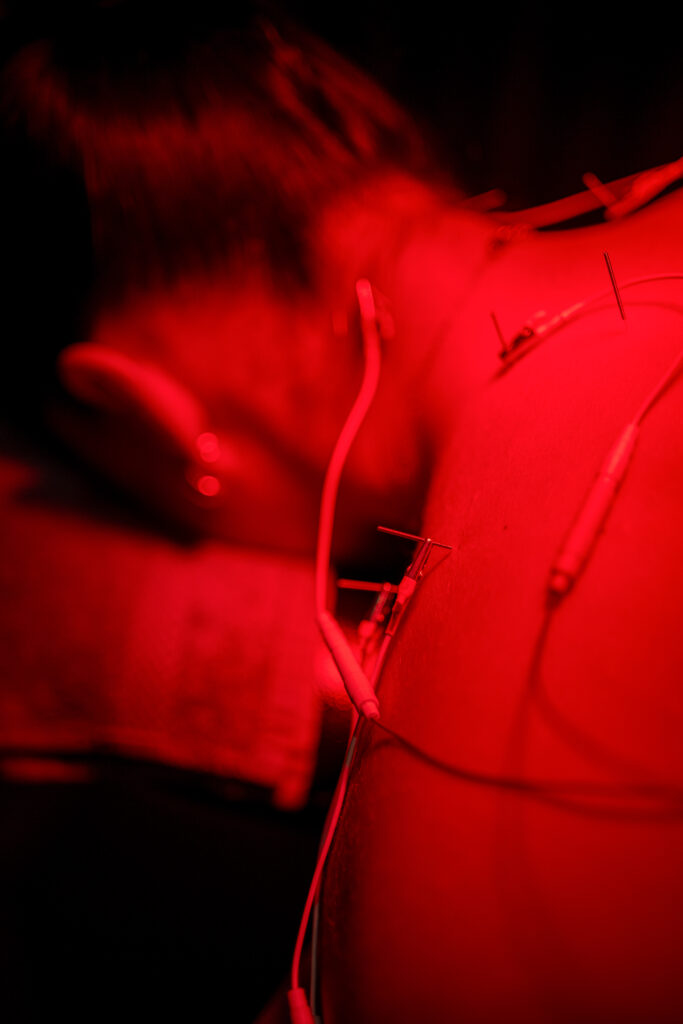
Electroacupuncture involves applying controlled electrical stimulation through selected acupuncture needles. In some cases of peripheral neuropathy, it may be considered when numbness, pain, or muscular weakness is prominent. The continuous stimulation can provide a different therapeutic input compared with manual acupuncture alone. Research has investigated electroacupuncture for neuropathic pain and peripheral nerve dysfunction, although further high-quality clinical studies are still needed to establish which patients are most likely to benefit.
Moxibustion
Moxibustion may be incorporated when the patient’s TCM presentation includes Cold or Yang deficiency. Its warming effect is traditionally used to promote circulation and warm the channels. However, special caution is required in patients with peripheral neuropathy because reduced temperature sensation can increase the risk of accidental burns. For this reason, heat-based treatments should be professionally supervised when significant sensory loss is present.
When Medical Evaluation Is Important
Peripheral neuropathy should not automatically be assumed to result from circulation problems or muscular tension. Because nerve damage can occur for many different reasons, identifying the underlying cause is important.
Medical evaluation is particularly recommended when numbness, tingling, or weakness:
- Appears suddenly
- Progresses rapidly
- Causes significant muscle weakness
- Affects balance or walking
- Develops after significant trauma
- Is accompanied by severe neck or back pain
- Is associated with changes in bladder or bowel control
- Occurs during or after chemotherapy
- Occurs in someone with diabetes, kidney disease, or another chronic condition
- Continues to worsen over time
Early diagnosis may help identify reversible causes and reduce the risk of permanent nerve damage.
Conclusion
Peripheral neuropathy is a complex condition with many possible causes, ranging from diabetes and nutritional deficiencies to chemotherapy, nerve compression, autoimmune disease, and chronic kidney disease. Because the underlying cause determines the appropriate medical management, persistent numbness, tingling, weakness, or nerve pain should always be properly evaluated. Traditional Chinese Medicine offers an additional perspective by examining how well Qi and Blood nourish the extremities, whether circulation through the channels has become obstructed, and whether underlying deficiency or Dampness patterns are present. Acupuncture and other appropriately selected TCM therapies may be used alongside conventional care to help manage discomfort, maintain mobility, and support overall function. The most appropriate approach is individualized, combining treatment of the underlying medical cause with supportive therapies selected according to the patient’s specific presentation.
References
Maciocia G. *The Foundations of Chinese Medicine*. 3rd ed. Elsevier; 2015.
Maciocia G. *The Practice of Chinese Medicine*. 3rd ed. Elsevier; 2015.
Deadman P, Al-Khafaji M, Baker K. *A Manual of Acupuncture*. Journal of Chinese Medicine Publications; 2007.
World Health Organization. *WHO Standard Acupuncture Point Locations in the Western Pacific Region*. 2008.
World Health Organization. *WHO Benchmarks for the Practice of Traditional Chinese Medicine*. 2021.
Pop-Busui R, et al. Diabetic Neuropathy: A Position Statement by the American Diabetes Association. *Diabetes Care*. 2017;40(1):136–154.
Finnerup NB, et al. Pharmacotherapy for Neuropathic Pain in Adults: A Systematic Review and Meta-analysis. *The Lancet Neurology*. 2015;14(2):162–173.
Dimitrova A, et al. Acupuncture for the Treatment of Peripheral Neuropathy: A Systematic Review and Meta-analysis. *Journal of Alternative and Complementary Medicine*. 2017.
National Center for Complementary and Integrative Health (NCCIH). *Acupuncture: Effectiveness and Safety*.
International Association for the Study of Pain (IASP). *Neuropathic Pain*.