Heel pain is one of the most common musculoskeletal complaints, affecting runners, active individuals, people who stand for long periods, and even those with sedentary lifestyles. One of the leading causes is plantar fasciitis, an overuse condition involving inflammation or degeneration of the plantar fascia, the thick band of connective tissue that supports the arch of the foot. While conventional medicine often attributes plantar fasciitis to repetitive strain and mechanical stress, Traditional Chinese Medicine (TCM) views heel pain from a broader perspective. Rather than focusing solely on the affected tissue, TCM evaluates the body’s overall balance, circulation of Qi and Blood, and the health of the organ systems that nourish the tendons, muscles, and bones. The plantar fascia acts like a shock absorber during walking and running. Repeated stress, prolonged standing, improper footwear, obesity, or sudden increases in physical activity may overload this tissue, resulting in microscopic tears and inflammation.
Common symptoms include:
- Sharp pain under the heel, especially during the first steps in the morning
- Pain after prolonged sitting or resting
- Tenderness along the arch of the foot
- Stiffness that gradually improves with movement
- Increased discomfort after prolonged standing or exercise
Key Organ Systems Involved
- Kidneys (Shen, 腎): According to TCM, the Kidneys govern the bones and nourish the tendons through Essence (Jing). Chronic heel pain often reflects an underlying Kidney deficiency, particularly in long-standing cases or older adults.
- Liver (Gan, 肝): The Liver stores Blood and nourishes the tendons and ligaments. When Liver Blood is insufficient or Liver Qi becomes stagnant, the plantar fascia may lose its flexibility, increasing susceptibility to injury and delayed healing.
- Spleen (Pi, 脾): The Spleen transforms nutrients into Qi and Blood. Weak Spleen function may contribute to Dampness accumulation, poor tissue repair, and muscle fatigue.
Common TCM Patterns
- Qi and Blood Stagnation
- Often develops after repetitive strain or injury.
Common features include:
- Localized sharp heel pain
- Fixed tenderness
- Pain aggravated by activity
- Improvement after treatment that promotes circulation
- Cold-Damp Bi Syndrome
- Cold and Damp pathogens obstruct the meridians of the foot.
Symptoms may include:
- Heavy sensation in the foot
- Morning stiffness
- Pain worsened by cold or rainy weather
- Improvement with warmth
- Kidney Deficiency
- Chronic dull heel pain
- Weak knees and lower back
- Fatigue
- Slow recovery
- Worse after prolonged standing
Treatment Principles in TCM
Treatment is individualized according to the patient’s pattern but generally aims to:
- Promote the circulation of Qi and Blood
- Remove Blood Stasis
- Expel Cold and Damp
- Strengthen the Kidneys
- Nourish the Liver
- Relax tendons and fascia
- Reduce inflammation and pain
Daily Self-Care Tips
In addition to professional treatment, the following strategies may support recovery:
- Stretch the calf muscles and plantar fascia regularly.
- Avoid standing for prolonged periods without adequate support.
- Wear supportive footwear with proper arch support.
- Apply gentle heat if symptoms worsen in cold weather.
- Maintain a healthy body weight to reduce stress on the plantar fascia.
- Gradually return to physical activity rather than increasing exercise intensity suddenly.
Daily Acupressure
- Yongquan (KI1, 湧泉): Location: On the sole of the foot, in the depression formed when the foot is plantar-flexed. Functions: Benefits the Kidney channel, Relaxes the foot, and Helps reduce heel discomfort.
- Taixi (KI3, 太溪): Location: Between the medial malleolus and the Achilles tendon. Functions: Tonifies Kidney Yin and Yang, Strengthens the heel and ankle, Supports chronic heel pain
- Kunlun (BL60, 崑崙): Location: Between the lateral malleolus and the Achilles tendon. Functions: Relaxes tendons, Promotes circulation, and Relieves heel and ankle pain.
TCM Treatment Recommendations
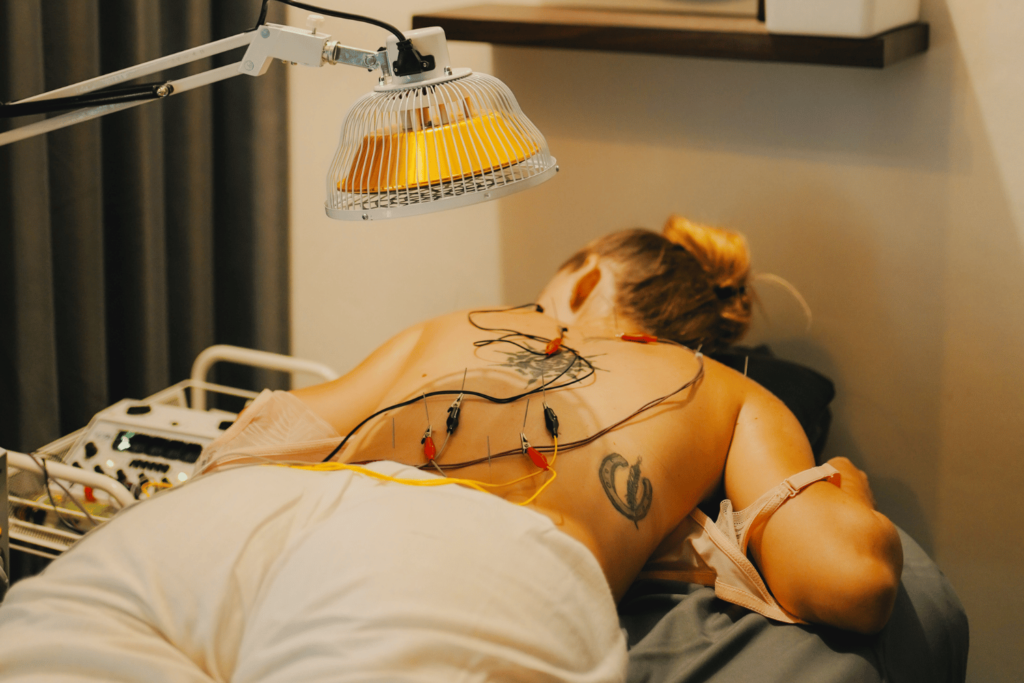
- Acupuncture: Acupuncture helps restore the smooth flow of Qi and Blood, reduce local inflammation, relieve muscle tension, and stimulate the body’s natural healing response. Treatment typically combines local points around the heel with distal points selected according to the individual’s underlying TCM pattern.
- Moxibustion: For patients with Cold-Damp patterns or chronic heel pain, moxibustion may help warm the meridians, improve circulation, and reduce stiffness.
- Cupping Therapy: When calf muscle tightness contributes to plantar fasciitis, cupping therapy along the posterior lower leg may help release muscular tension and improve blood flow.
Conclusion
Plantar fasciitis is more than just a local foot condition. From a Traditional Chinese Medicine perspective, heel pain reflects not only mechanical stress but also underlying imbalances involving the Kidneys, Liver, Spleen, and the circulation of Qi and Blood. By addressing both the symptoms and the root pattern, acupuncture and other TCM therapies aim to support healing, reduce pain, and improve long-term function. Early assessment and individualized treatment may help prevent chronic pain and allow individuals to return to daily activities more comfortably.
References
Maciocia G. The Foundations of Chinese Medicine. 3rd ed. Elsevier; 2015.
Deadman P, Al-Khafaji M, Baker K. A Manual of Acupuncture. Journal of Chinese Medicine Publications; 2007.
World Health Organization. WHO Standard Acupuncture Point Locations in the Western Pacific Region. 2008.
World Health Organization. WHO Benchmarks for the Practice of Traditional Chinese Medicine. 2021.
Buchbinder R. Plantar Fasciitis. New England Journal of Medicine. 2004;350:2159-2166.
Vickers AJ, et al. Acupuncture for Chronic Pain: Update of an Individual Patient Data Meta-analysis. The Journal of Pain. 2018;19(5):455-474.
Lim AT, et al. Acupuncture for Plantar Heel Pain: A Systematic Review. Acupuncture in Medicine. 2016.
National Center for Complementary and Integrative Health (NCCIH). Acupuncture: In Depth.
American Academy of Orthopaedic Surgeons (AAOS). Clinical Practice Guidelines: Heel Pain/Plantar Fasciitis