
In Traditional Chinese Medicine (TCM), chronic pain is not viewed as a single condition. Instead, it is usually categorized into two major mechanisms: stagnation or deficiency. Understanding the difference between these two patterns is crucial because they require different treatment strategies. Stagnation refers to blockage of Qi and Blood flow in the meridians, while deficiency indicates a lack of the body’s vital substances, such as Qi, Blood, Yin, or Yang. When properly identified, treatment can address the root cause rather than just temporarily relieving symptoms.
Key Organ Systems Involved:
- Liver (Gan): Governs the smooth flow of Qi and influences tendons and muscles. Liver imbalance often contributes to Qi stagnation.
- Kidney (Shen): Controls bones and the lower back. Kidney deficiency is frequently linked to chronic or long-term pain.
- Spleen (Pi): Responsible for producing Qi and Blood from food. Weak Spleen function can lead to poor nourishment of muscles.
Common TCM Patterns for Chronic Pain:
- Qi Stagnation: Pain that moves from place to place, often associated with stress or emotional tension.
- Blood Stagnation: Sharp, fixed pain that may worsen at night or after injury.
- Kidney Deficiency: Dull, aching lower back pain with weakness or fatigue.
- Qi and Blood Deficiency: Mild but persistent soreness, often accompanied by tiredness or poor circulation.
Treatment Principles in TCM:
- For Stagnation Patterns:
- Move Qi and Blood.
- Open meridian pathways.
- Reduce muscular tension.
- For Deficiency Patterns:
- Tonify Qi, Blood, or Kidney energy.
- Strengthen the body’s foundational systems.
- Improve nourishment of muscles and joints.
Diet and Lifestyle Tips (TCM-Based):
- For stagnation patterns:
- Engage in regular movement such as walking, stretching, or yoga.
- Eat foods that promote circulation such as turmeric, ginger, garlic, and green vegetables.
- For deficiency patterns:
- Focus on nourishing foods like bone broth, black sesame seeds, walnuts, eggs, and slow-cooked soups.
- Prioritize rest and avoid excessive physical exhaustion.
- For both patterns:
- Maintain consistent sleep patterns.
- Avoid excessive cold exposure, especially to the back.
Daily Acupressure Points:
- LV3 (Taichong): Located on the foot between the first and second toes. Moves Liver Qi and helps relieve stagnation-related pain.
- SP6 (Sanyinjiao): On the inner lower leg above the ankle. Strengthens Spleen, Liver, and Kidney systems.
- BL23 (Shenshu): On the lower back, associated with Kidney energy and lumbar support.
- LI4 (Hegu): On the hand between thumb and index finger. Promotes Qi circulation and relieves pain.
Press each point gently for 1–2 minutes while breathing slowly.
TCM Treatment Recommendations:
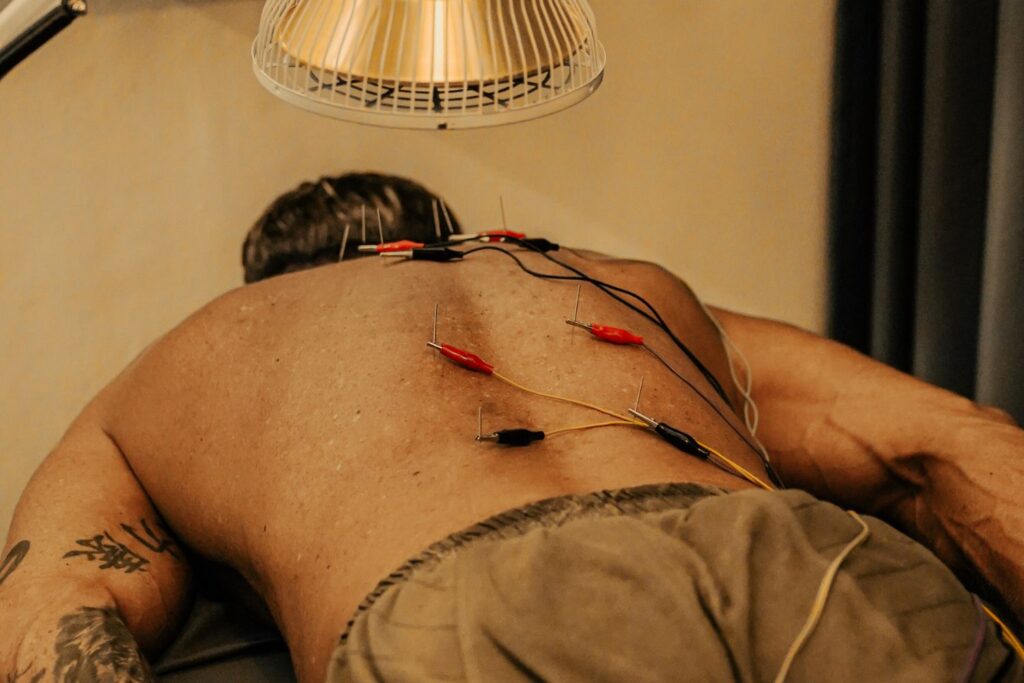
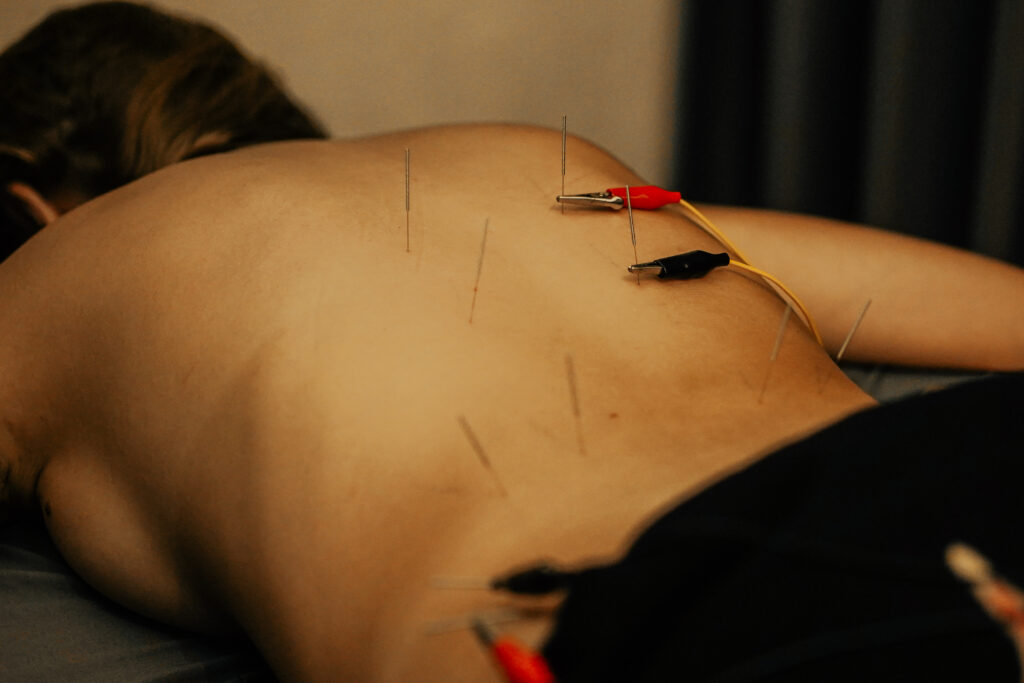
- Acupuncture: Selected according to the pattern—moving Qi for stagnation or tonifying points for deficiency.
- Cupping Therapy: Helpful for Qi and Blood stagnation in the back and shoulders.
- Moxibustion: Beneficial for deficiency patterns, especially Kidney Yang deficiency.
- Herbal Formulas:
- Xue Fu Zhu Yu Tang for Blood stagnation.
- Du Huo Ji Sheng Tang for chronic pain with deficiency.
Conclusion:
From a TCM perspective, chronic pain is rarely random. It often results from either blockage of circulation (stagnation) or lack of nourishment (deficiency). Distinguishing between these two patterns allows practitioners to choose the most effective treatments. By combining acupuncture, lifestyle adjustments, and dietary support, both stagnation and deficiency-related pain can gradually improve.
Sources:
- Maciocia, Giovanni. The Foundations of Chinese Medicine. Elsevier.
- Deadman, Peter. A Manual of Acupuncture.
- Wiseman, Nigel. Fundamentals of Chinese Medicine.