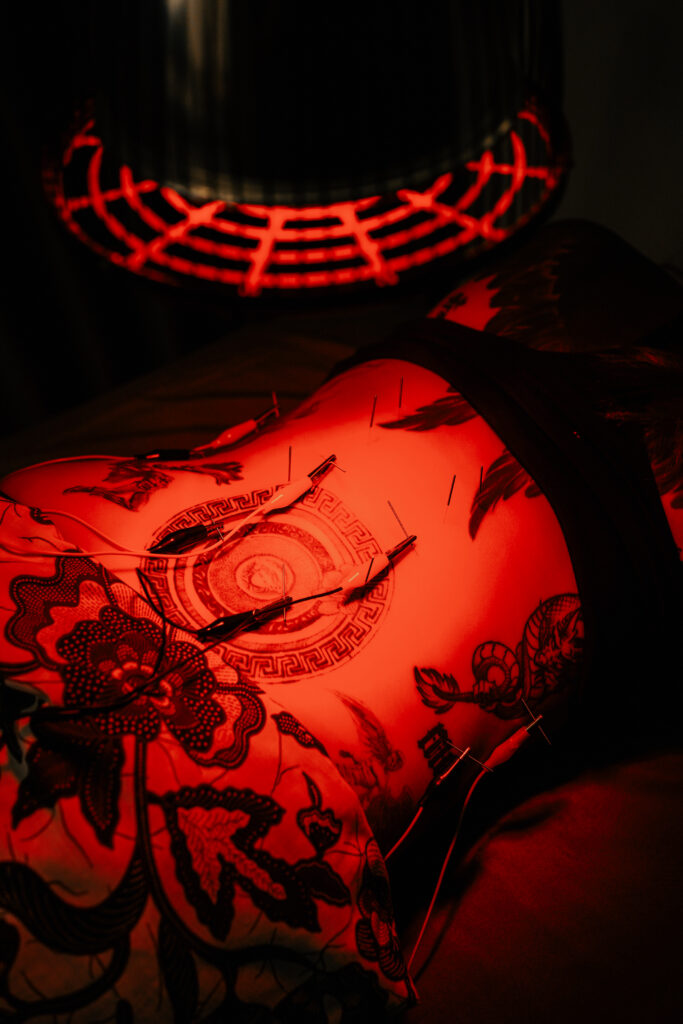
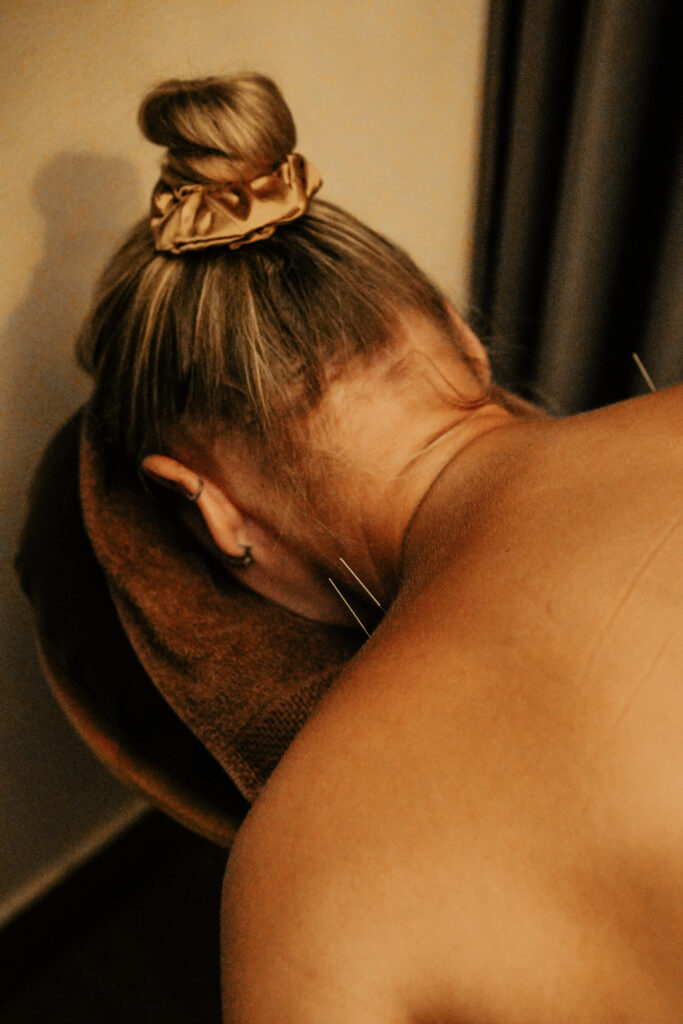
In Traditional Chinese Medicine (TCM), pain in the neck, shoulders, and back is often explained through the pathways of the meridians (jing luo). These energy channels circulate Qi and Blood throughout the body. When the flow within these meridians becomes blocked by stagnation, external pathogens, or internal deficiency, pain and stiffness can develop along the pathway of the affected channel. Understanding which meridian is involved can help identify the root of the discomfort and guide effective treatment.
Key Organ Systems Involved:
- Urinary Bladder (Taiyang) Meridian: The longest meridian in the body, running along both sides of the spine. Frequently involved in upper back and lower back pain.
- Gallbladder (Shaoyang) Meridian: Travels along the side of the neck and shoulders. Often related to lateral neck pain and shoulder tension.
- Small Intestine (Taiyang) Meridian: Runs through the scapula and posterior shoulder region, commonly involved in shoulder blade pain.
- Governing Vessel (Du Mai): Runs along the midline of the spine and influences spinal strength and posture.
Common TCM Patterns for Neck and Back Pain:
- Wind-Cold-Damp Bi Syndrome: Pain that worsens in cold or humid environments with stiffness and heaviness.
- Qi and Blood Stagnation: Fixed, stabbing pain that may follow a specific meridian pathway.
- Kidney Deficiency: Chronic lower back weakness, soreness, and fatigue.
Treatment Principles in TCM:
- Open the meridian pathways and restore Qi flow.
- Move Qi and Blood to remove stagnation.
- Strengthen the Kidneys to support the spine.
- Expel external pathogens such as Wind, Cold, and Damp.
Diet and Lifestyle Tips (TCM-Based):
- Keep the back and neck warm, especially in windy environments.
- Avoid prolonged sitting without movement.
- Include warming foods such as ginger, garlic, bone broth, and cinnamon.
- Stretch the spine and shoulders daily to maintain circulation along the meridians.
Daily Acupressure Points:
- BL10 (Tianzhu): Located on the back of the neck, 1.3 cun lateral to the spine. Helps relieve neck stiffness and headaches.
- SI11 (Tianzong): In the center of the scapula. Relieves shoulder blade pain and improves circulation in the upper back.
- GB21 (Jianjing): On the top of the shoulder. Releases tension and benefits the neck and shoulders.
- BL23 (Shenshu): On the lower back, associated with Kidney energy and lumbar strength.
Apply steady pressure to each point for 1–2 minutes while breathing deeply.
TCM Treatment Recommendations:
- Acupuncture: Target affected meridians such as Bladder, Gallbladder, and Small Intestine channels.
- Cupping therapy: Applied along the Bladder meridian on the back to improve blood circulation.
- Gua Sha: Useful for releasing stagnation in the shoulder and upper back.
- Herbal formulas: Du Huo Ji Sheng Tang for chronic Bi syndrome affecting the back and joints.
Conclusion: In TCM, pain rarely occurs randomly. It usually follows the path of a meridian that has become blocked or weakened. By identifying which channel is affected, treatment can be more precise and effective. Supporting the meridian system through acupuncture, movement, and proper lifestyle habits can significantly reduce recurring neck, shoulder, and back pain.
Sources:
- Deadman, Peter. A Manual of Acupuncture.
- Maciocia, Giovanni. The Foundations of Chinese Medicine.
- Wiseman, Nigel & Ellis, Andrew. Fundamentals of Chinese Medicine