
Polycystic Ovary Syndrome (PCOS) is one of the most common endocrine disorders in women of reproductive age. In Western medicine, it’s associated with hormonal imbalance, insulin resistance, and irregular ovulation. But from a Traditional Chinese Medicine (TCM) perspective, PCOS is seen through the lens of internal disharmony often involving stagnation, deficiency, or phlegm accumulation that disrupts the natural rhythm of menstruation.
Unlike conventional approaches that often focus on regulating hormones synthetically, TCM aims to restore internal balance by strengthening vital organs, promoting circulation, resolving phlegm, and harmonizing the menstrual cycle. This article explores PCOS and irregular periods through TCM’s holistic view, offering insight into its organ systems, patterns, and practical steps for support.
Key Organ Systems Involved
- Kidneys (Shen): Govern reproductive essence and are at the root of menstrual health. Kidney Deficiency often leads to delayed ovulation, infertility, or long cycles.
- Liver (Gan): Regulates the smooth flow of Qi and Blood. Liver Qi stagnation can result in emotional stress, irregular periods, and painful PMS.
- Spleen (Pi): Transforms food into Qi and Blood. A weak Spleen can lead to dampness or phlegm accumulation, contributing to ovarian cysts or obesity.
- Heart (Xin): Houses the Shen (mind/spirit) and influences menstruation through the Heart-Uterus connection (Bao Mai). Emotional stress and sleep disturbances may affect cycle regulation.
Common TCM Patterns in PCOS and Irregular Periods
- Kidney Yang Deficiency
- Symptoms: Long cycles, low libido, cold hands and feet, fatigue, low back soreness, pale complexion.
- Tongue: Pale and swollen.
- Pulse: Deep, weak.
- Kidney Yin Deficiency
- Symptoms: Scanty periods, night sweats, dizziness, dry skin, hot flashes, poor egg quality.
- Tongue: Red, little coating.
- Pulse: Thin, rapid.
- Liver Qi Stagnation
- Symptoms: Irregular or painful periods, breast tenderness, mood swings, irritability, PMS.
- Tongue: Slightly red sides.
- Pulse: Wiry.
- Phlegm-Damp Accumulation
- Symptoms: Overweight, fatigue, heavy discharge, delayed menstruation, cystic ovaries, sticky tongue coating.
- Tongue: Pale or swollen with greasy white coating.
- Pulse: Slippery.
- Spleen Qi Deficiency
- Symptoms: Bloating, loose stools, fatigue, weak muscles, spotting before periods, difficulty conceiving.
- Tongue: Pale with teeth marks.
- Pulse: Soft or weak.
Treatment Principles in TCM
- Tonify the Kidneys: Support reproductive energy and regulate ovulation.
- Soothe the Liver and move Qi: Prevent stagnation that disrupts hormone balance.
- Transform Phlegm and resolve Dampness: Particularly for patients with cysts, weight gain, or greasy tongue coating.
- Strengthen the Spleen: Improve digestion and transform fluids properly.
- Calm the Shen: Support emotional stability and sleep to regulate the cycle.
Each treatment is highly individualized, depending on the dominant pattern.
Diet and Lifestyle Tips (TCM-Based)
Recommended Foods:
- For Kidney Yang Deficiency: Bone broth, lamb, walnut, cinnamon, black sesame seeds, ginger.
- For Kidney Yin Deficiency: Goji berries, tofu, barley, black beans, mulberries, seaweed.
- For Liver Qi Stagnation: Green leafy vegetables, celery, hawthorn berry, peppermint tea, lemon water.
- For Phlegm-Damp Accumulation: Adzuki beans, lotus leaf tea, mung beans, job’s tears (coix), radish, avoid dairy.
- For Spleen Qi Deficiency: Cooked grains (millet, rice porridge), pumpkin, sweet potato, carrots, warm soups.
What to Avoid:
- Cold/raw food, especially around menstruation.
- Sugary, greasy, and highly processed food.
- Excessive coffee, alcohol, and late-night eating.
Lifestyle Tips:
- Prioritize consistent sleep and meals.
- Engage in gentle exercise like walking, tai chi, or yoga.
- Manage emotional stress—journaling, talking, acupuncture for Shen regulation.
- Avoid overwork and excessive screen time (drains Qi).
Daily Acupressure for PCOS and Irregular Periods
- SP6 – Sanyinjiao (三阴交)
Location: 3 cun above the medial malleolus.
Function: Regulates menstruation, tonifies the Spleen, Liver, and Kidneys. - LV3 – Taichong (太冲)
Location: On the foot, between the 1st and 2nd toes.
Function: Moves Liver Qi, reduces PMS and menstrual irregularity. - CV4 – Guanyuan (关元)
Location: On the midline, 3 cun below the navel.
Function: Tonifies Kidney and supports reproductive organs. - ST36 – Zusanli (足三里)
Location: 3 cun below the kneecap, lateral to the tibia.
Function: Tonifies Qi and Blood, strengthens digestion. - KD3 – Taixi (太溪)
Location: In the depression between the inner ankle and Achilles tendon.
Function: Tonifies Kidney Yin/Yang, improves hormonal balance.
Massage each point for 1–2 minutes daily. Best practiced during the follicular or premenstrual phase based on your cycle.
TCM Treatment Recommendation
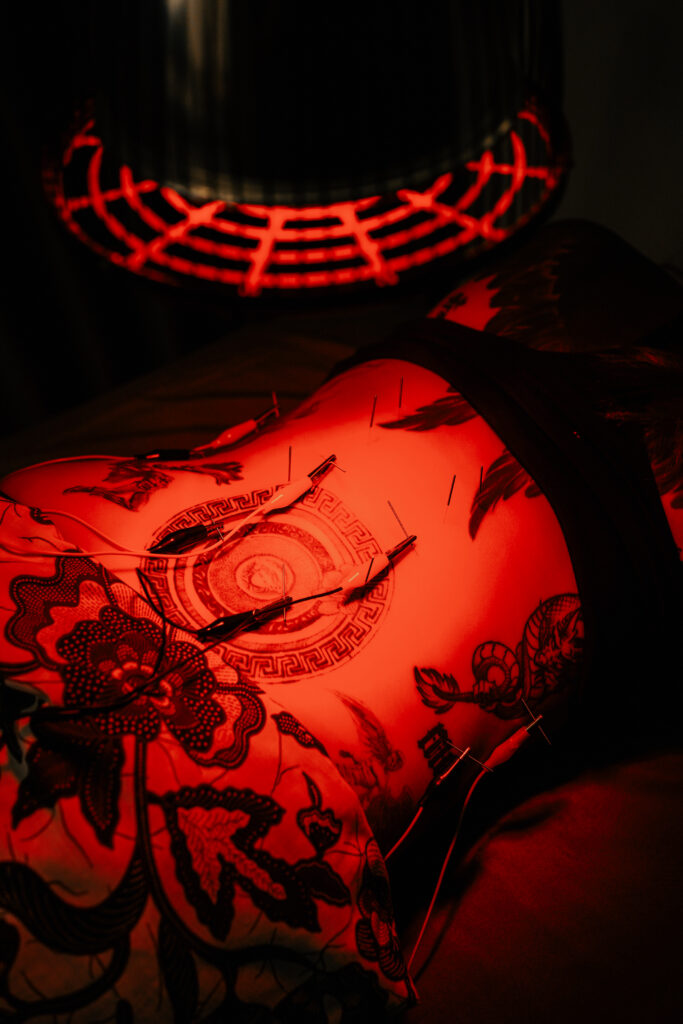
- Acupuncture: Helps regulate the cycle, reduce cyst formation, and improve ovulation. A common combo includes SP6, CV4, LV3, and ST36.
- Moxibustion: Warming therapy on points like CV4 or BL23 to support Yang energy and dissolve Dampness.
- Cupping or Gua Sha: May be used around the lower back to improve blood flow.
Conclusion
From the TCM perspective, PCOS is not a fixed diagnosis but a reflection of internal disharmony—often treatable with consistent, individualized care. By identifying the root pattern, supporting your organ systems with food, lifestyle, and acupressure, and working with a trained practitioner, women with PCOS can regulate their cycles, support fertility, and improve overall health naturally.
Sources
- Lyttleton, J. (2004). Treatment of Infertility with Chinese Medicine. Elsevier.
- Chen, J.K. & Chen, T.T. (2004). Chinese Medical Herbology and Pharmacology. Art of Medicine Press.
- Flaws, B. & Sionneau, P. (2001). The Treatment of Modern Western Medical Diseases with Chinese Medicine: A Textbook & Clinical Manual. Blue Poppy Press.
- Maciocia, G. (2011). Obstetrics and Gynecology in Chinese Medicine. Elsevier.
- World Health Organization. (2007). WHO Standard Terminologies on Traditional Medicine in the Western Pacific Region.