
Polycystic Ovary Syndrome (PCOS) is often explained in Western medicine as a hormonal and metabolic disorder, but in Traditional Chinese Medicine (TCM) it is understood through the language of Qi, Blood, Phlegm, and Dampness.
From a TCM perspective, PCOS is not simply about irregular ovulation—it is a story of Blood stagnation and Damp accumulation. The ovaries and reproductive system become “blocked” when Damp and Phlegm obstruct the channels, preventing proper flow of Qi and Blood. Over time, this leads to cyst formation, irregular periods, infertility, weight gain, acne, and emotional distress.
The key is to restore movement, transform Damp, and nourish Blood so the body’s natural cycles can return.
Key Organ Systems Involved
- Spleen (Pi, 脾)
- Governs transformation and transportation of fluids.
- Weak Spleen Qi → leads to Damp/Phlegm accumulation, obesity, cyst formation.
- Liver (Gan, 肝)
- Regulates Qi flow and stores Blood.
- Stagnant Liver Qi → prevents proper Blood circulation to the uterus, causing irregular menstruation or amenorrhea.
- Kidney (Shen, 腎)
- Stores Essence (Jing) and governs reproduction.
- Kidney deficiency → infertility, low libido, hormonal imbalance.
- Chong & Ren Vessels (Extraordinary Channels)
- Directly connected to the uterus and menstrual cycle.
- Blockage due to Damp/Phlegm or Blood stasis → irregular cycles, infertility, and cysts.
Common TCM Patterns for PCOS
Phlegm-Damp Obstruction
- Symptoms: obesity, abdominal fullness, irregular or absent menstruation, excessive vaginal discharge, ovarian cysts, fatigue.
- Tongue: swollen, greasy coat.
- Pulse: slippery.
Liver Qi Stagnation with Blood Stasis
- Symptoms: irregular or painful periods, dark clotted menstrual blood, breast distension, mood swings.
- Tongue: dark or purplish with petechiae.
- Pulse: wiry or choppy.
Kidney Yin Deficiency
- Symptoms: scanty or absent periods, night sweats, hot flushes, infertility, lower back pain.
- Tongue: red, little coat.
- Pulse: thin and rapid.
Kidney Yang Deficiency
- Symptoms: prolonged cycles, cold limbs, low libido, weight gain, fatigue, edema.
- Tongue: pale, swollen.
- Pulse: deep, weak.
Treatment Principles in TCM
- Transform Damp and resolve Phlegm to clear obstruction.
- Move Liver Qi and invigorate Blood to regulate menstruation.
- Tonify Kidney Yin or Yang depending on deficiency.
- Strengthen the Spleen to prevent further Damp formation.
- Regulate Chong and Ren vessels to restore reproductive harmony.
Diet and Lifestyle Tips (TCM-Based)
Diet Tips
- To drain Damp & Phlegm: barley, adzuki beans, mung beans, winter melon, radish.
- To move Blood: ginger, turmeric, Chinese chives, dark leafy greens.
- To tonify Kidney: black sesame, walnuts, goji berries, lamb.
- Avoid: dairy, greasy fried foods, sugary snacks, alcohol—these worsen Damp and Phlegm.
- Drink warm teas (cinnamon, ginger, or dried tangerine peel) to aid digestion.
Lifestyle Tips
- Regular exercise (walking, yoga, Tai Chi) to move Qi and Blood.
- Avoid sitting for long hours—move every 30–60 minutes.
- Prioritize adequate rest; sleep before 11 p.m.
- Practice stress-reduction techniques: journaling, meditation, deep breathing.
- Keep abdomen and lower back warm to support Kidney Yang.
Daily Acupressure for PCOS
SP9 – Yinlingquan (陰陵泉)
- Location: Below the medial condyle of the tibia, on the inner leg.
- Function: Resolves Damp, regulates Spleen, improves fluid metabolism.
ST40 – Fenglong (豐隆)
- Location: Midpoint between knee and ankle, lateral side of leg.
- Function: Transforms Phlegm and Damp, clears obstructions.
LV3 – Taichong (太沖)
- Location: Top of the foot, between 1st and 2nd metatarsal bones.
- Function: Moves Liver Qi, reduces stagnation, regulates menstruation.
REN4 – Guanyuan (關元)
- Location: 3 cun below the umbilicus.
- Function: Tonifies Kidneys, regulates uterus and menstruation.
KI3 – Taixi (太溪)
- Location: Between medial malleolus and Achilles tendon.
- Function: Strengthens Kidney Yin and Yang, restores reproductive balance.
Technique: Press gently for 1–2 minutes per point, breathe slowly, and repeat daily.
TCM Treatment Recommendations
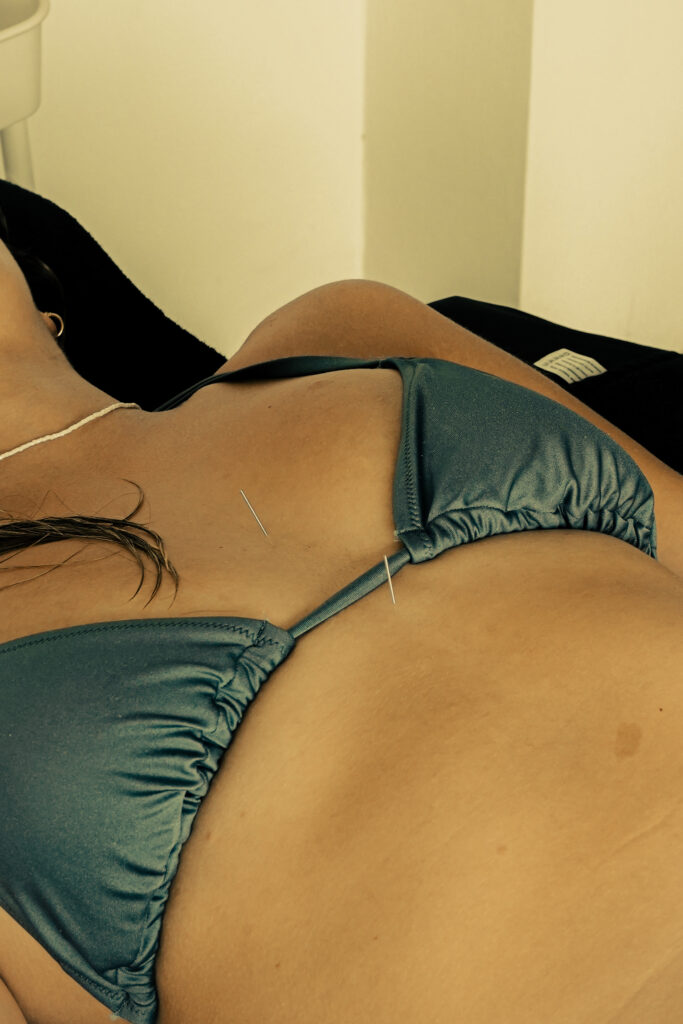
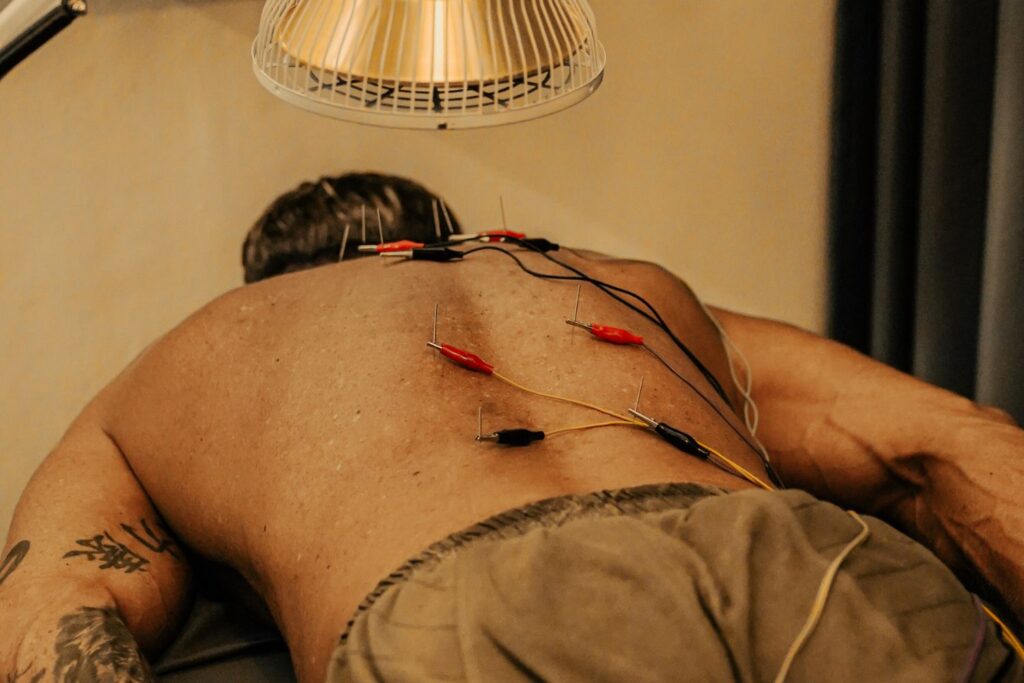
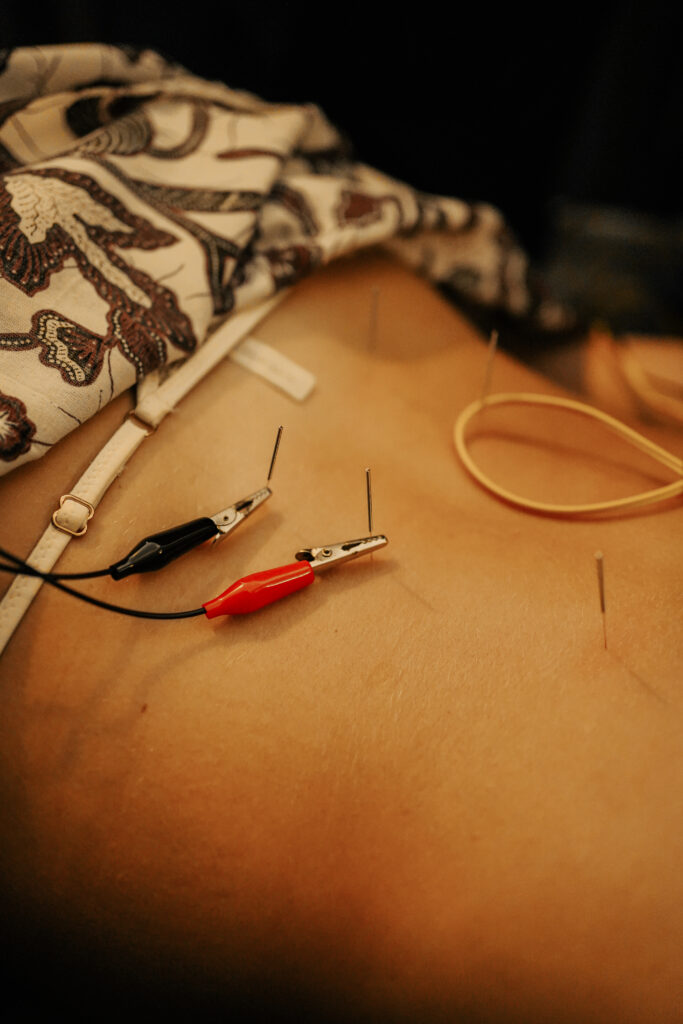
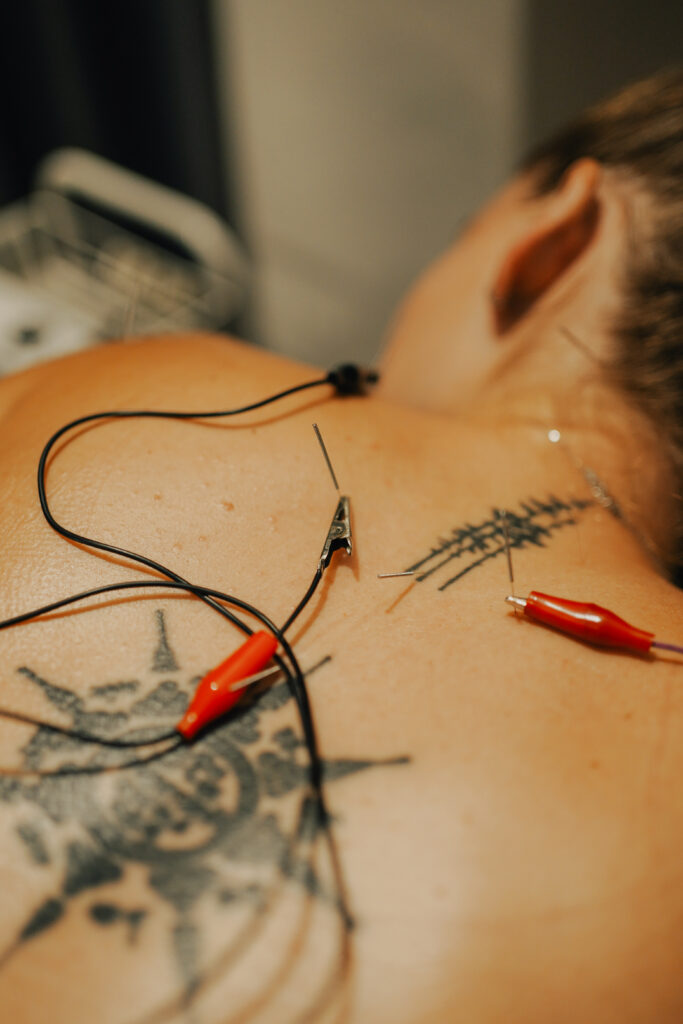
- Acupuncture:
- For Phlegm-Damp: SP9, ST40, REN12, ST28.
- For Blood Stasis: LV3, SP10, REN3, BL17.
- For Kidney deficiency: KI3, REN4, BL23, DU4.
- Herbal Medicine:
- Cang Fu Dao Tan Wan → for Phlegm-Damp type with cysts and obesity.
- Xiao Yao San → for Liver Qi stagnation with stress and PMS.
- Gui Shao Di Huang Wan → for Kidney Yin deficiency with scanty periods.
- You Gui Wan → for Kidney Yang deficiency with fatigue and infertility.
- Cupping/Gua Sha: on abdomen or back to move Blood and clear stagnation.
- Moxibustion: applied to REN4, BL23, DU4 in Yang deficiency patterns.
Conclusion
From a TCM perspective, PCOS is a Blood and Damp story. Dampness and Phlegm obstruct the uterus, Blood stagnates, and Kidney deficiency weakens reproductive energy. This combination explains the hallmark symptoms: cysts, irregular cycles, infertility, and weight gain.
Treatment focuses on transforming Damp, moving Blood, tonifying the Kidneys, and restoring harmony to the Chong and Ren vessels. With the support of acupuncture, herbal medicine, dietary therapy, and lifestyle balance, women with PCOS can gradually restore regular cycles and reproductive health.
Sources
- Lyttleton, Jane. Treatment of Infertility with Chinese Medicine. Churchill Livingstone, 2004.
- Maclean, Will & Lyttleton, Jane. Clinical Handbook of Internal Medicine: Gynecology. University of Western Sydney, 1998.
- Flaws, Bob. A Handbook of Chinese Medical Gynecology. Blue Poppy Press, 2003.