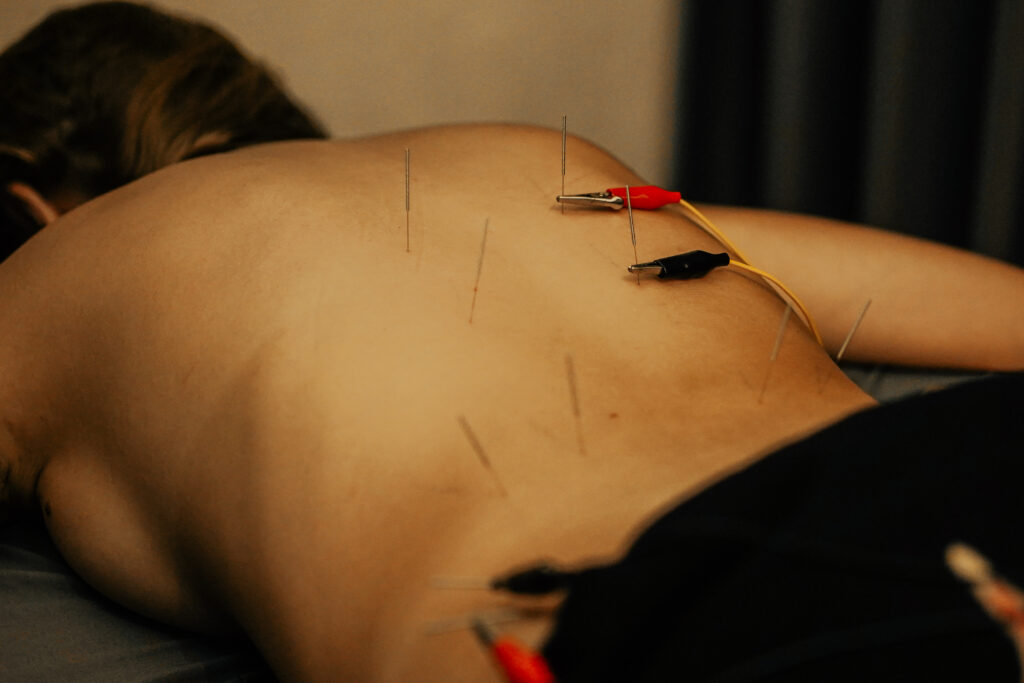
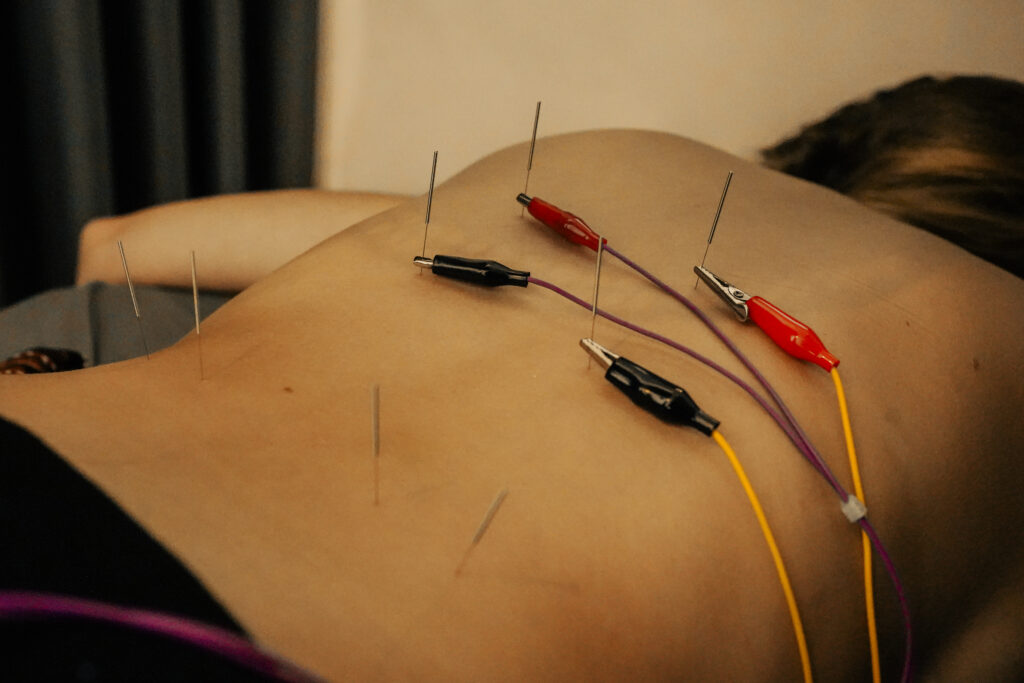
Back pain is one of the most common modern complaints, often linked to prolonged sitting or standing. From a Traditional Chinese Medicine (TCM) perspective, the back is closely tied to the Kidney (Shen), which governs the bones, spine, and lumbar region. Prolonged postures—whether sitting or standing—can disrupt the smooth flow of Qi and Blood in the channels, weaken the Kidney system, and allow Dampness or Cold to accumulate.
Thus, TCM does not view sitting or standing as inherently “worse,” but rather evaluates how each posture strains the body’s Qi and organ systems differently.
Key Organ Systems Involved
- Kidney (Shen)
- Provides foundational Essence (Jing) for the spine and low back.
- Deficiency causes weakness, soreness, or chronic pain in the lumbar area.
- Liver (Gan)
- Regulates smooth Qi and Blood flow. Prolonged posture can lead to stagnation, resulting in stiffness and tension.
- Spleen (Pi)
- Governs muscles and limbs. Weak Spleen Qi allows Dampness to accumulate, creating heaviness and back discomfort.
- Urinary Bladder Channel
- Runs along the back. Qi stagnation or Damp invasion here manifests as back pain.
Common TCM Patterns Related to Sitting and Standing
Prolonged Sitting
- TCM View: Sitting for long hours weakens the Spleen and Kidneys, leading to Qi stagnation and Damp accumulation.
- Symptoms: dull low back ache, heaviness, fatigue, poor circulation, stiffness on rising.
- Pattern: Spleen Qi deficiency with Dampness, Kidney Qi deficiency.
Prolonged Standing
- TCM View: Standing for long periods taxes the Kidneys and impairs Blood circulation in the lower back and legs.
- Symptoms: soreness, fatigue, heaviness in lumbar and knees, worse at the end of the day.
- Pattern: Kidney Yin deficiency, Qi and Blood stagnation in the Bladder channel.
Treatment Principles in TCM
- Tonify Kidney Qi/Yin to strengthen the lumbar region.
- Move Qi and invigorate Blood to relieve stagnation from prolonged postures.
- Strengthen the Spleen to prevent Damp accumulation.
- Expel Cold-Damp in chronic cases with stiffness and heaviness.
Diet and Lifestyle Tips (TCM-Based)
Diet Tips
- For Kidney support: black beans, walnuts, bone broth, sesame seeds.
- For Spleen support: warm cooked meals, millet, oats, pumpkin, sweet potato.
- To clear Damp: barley, adzuki beans, ginger, avoid greasy/cold foods.
Lifestyle Tips
- Alternate between sitting and standing—avoid either for more than 45–60 minutes at a time.
- Do gentle stretches to keep Qi and Blood moving.
- Keep the lower back warm to protect against Cold invasion.
- Practice deep abdominal breathing to strengthen Kidney Qi.
- Incorporate restorative exercise like Tai Chi or Qigong.
Daily Acupressure for Back Pain from Sitting/Standing
- BL23 – Shen Shu (腎俞)
- Location: 1.5 cun lateral to the lower border of L2.
- Function: Tonifies Kidneys, relieves chronic low back pain.
- BL40 – Wei Zhong (委中)
- Location: Midpoint of the popliteal crease (behind the knee).
- Function: Clears stagnation in the Bladder channel, relieves acute back pain.
- GV4 – Ming Men (命門)
- Location: On the midline, below the spinous process of L2.
- Function: Warms Kidney Yang, strengthens lumbar region.
- KD3 – Tai Xi (太溪)
- Location: Between the medial malleolus and Achilles tendon.
- Function: Tonifies Kidney Yin and Qi, supports spine.
- GB34 – Yang Ling Quan (陽陵泉)
- Location: Below the lateral aspect of the knee, in the depression anterior and inferior to the fibula head.
- Function: Benefits tendons, relieves muscle stiffness from prolonged standing.
Technique: Apply moderate pressure for 1–2 minutes on each point while breathing slowly.
TCM Treatment Recommendations
- Acupuncture: BL23, BL40, GV4, KD3, GB34 to regulate Kidney, move Qi, and relieve pain.
- Moxibustion: over GV4 and BL23 for Cold-Damp back pain.
- Cupping or Gua Sha: on Bladder channel along lumbar region for stagnation.
Conclusion
From a TCM perspective, both sitting and standing can harm the back if done excessively. Sitting weakens the Spleen and Kidneys and promotes Dampness, while standing taxes the Kidneys and stagnates Qi and Blood. The key is balance—alternating postures, nourishing the organs through diet and lifestyle, and practicing acupressure or acupuncture to restore flow. With these practices, the back remains strong, supple, and resilient.
Sources
- Maciocia, Giovanni. The Practice of Chinese Medicine. Elsevier, 2005. ISBN: 9780443074905
- Deadman, Peter, Al-Khafaji, M., & Baker, K. A Manual of Acupuncture. Journal of Chinese Medicine Publications, 2007. ISBN: 0951054651
- Chen, John K., & Chen, Tina T. Chinese Medical Herbology and Pharmacology. Art of Medicine Press, 2004. ISBN: 9780974063504